Cornell is a global leader in sustainability and climate change research, teaching and engagement. Our campuses are living laboratories for developing, testing and implementing solutions that address these most challenging issues.



Four CCE county offices tapped to lead NYS clean energy work

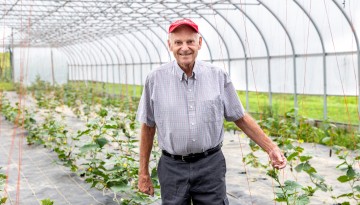
Four Cornell Cooperative Extension county offices are leading statewide efforts to establish a network of Regional Clean Energy Hubs as part of Gov. Kathy Hochul’s $52 million initiative to connect local communities with clean energy resources.

Broccoli looks more like cauliflower in a warmer world

A new study identifies the genetic underpinnings for why broccoli heads become abnormal when it’s hot, providing insight into effects of climate-induced warming for all crops and pointing the way for breeding heat-resistant new varieties.

Cornell to lead new semiconductor research center

Cornell is leading a new $34 million research center that will accelerate the creation of energy-efficient semiconductor materials and technologies, and develop revolutionary new approaches for microelectronics systems.

Florida Field Course benefits biology students, study finds

Participation in the immersive Florida Field Course led to positive professional outcomes, higher rates of publications, and faculty positions at research institutions, according to a new study from Cornell ecology and evolutionary biology researchers.

Lyrebird vocal diversity reduced in fragmented habitat

The Albert’s lyrebird is a talented mimic, but as its rainforest habitat in Australia shrinks, so does the number of sounds that the bird can produce, degrading lyrebird culture.

Cornell research informs ‘nature finance’ for biodiversity negotiators

Cornell researchers are proposing novel approaches to account for the true value of nature to the global financial bottom line.

Around Cornell

Cornell startup Carbon To Stone enters carbon removal pre-purchase agreement with Frontier

The $500,000 pre-purchase agreement is intended to support technology developed in the lab of Greeshma Gadikota and licensed through Cornell University’s Center for Technology Licensing.

Around Cornell

Biodegradable medical gowns may add to greenhouse gas

Due to faster decomposition, disposable and plasticized biodegradable medical gowns introduce greenhouse gas discharge problems in landfills, according to new Cornell engineering research.

Soil health summit connects farmers, researchers, policymakers

Cornell hosted the second New York Soil Health Summit Dec. 13, bringing together those who aim to assist growers in mitigating and adapting to climate change while protecting farmer livelihoods and rural economies.