The Office of Academic Integration has awarded $750,000 in seed grants to 10 studies ranging from refugee health and legal rights, to a vaccine treating fentanyl addiction and overdose, to pancreatic cancer and antibiotic tolerance.
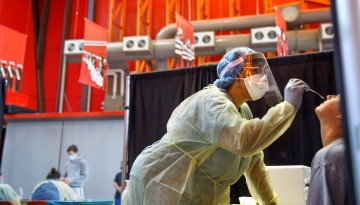
Cornell researchers found no evidence of students transmitting COVID-19 to employees or the broader community during the fall semester, but students who traveled were eight times more likely to test positive within two weeks of their return.
In partnership with New York community groups, Cornell researchers are developing a hyperlocal weather forecasting system designed to help emergency response.
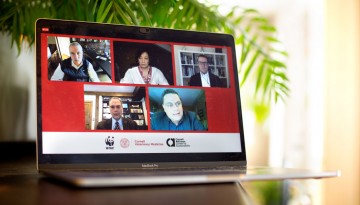
Future pandemics can be averted if the world’s governments eliminate unnecessary wildlife trade and adopt holistic approaches, according to experts at a Feb. 23 virtual conference.
Millions of people around the world hushed on Feb. 18 to hear NASA engineer Swati Mohan ’04 calmly call the play-by-play of Perseverance rover landing on Mars.
Cornell scientists from the College of Engineering have identified nitrides as new contenders when it comes to quantum materials for computing and low-temperature electronics.
A new study identifies the mechanism for tolerance to penicillin and related antibiotics in bacteria, findings that could lead to new therapies that boost the effectiveness of these treatments.
Cornell’s Center for Technology Licensing has launched a fellowship program for Ph.D. graduates and postdoctoral researchers interested in a career in business development, commercialization or entrepreneurship.
The Commercialization Fellowship, which wrapped up its fifth cohort in December 2020, helps engineers turn their academic research into businesses that solve real-world problems.