With just a push of a button, faculty and students can create dozens of design variations for anything they want to build. It's all thanks to Cornell's partnership with engineering-software company Autodesk, which is helping students win competitions and improve their research.
Grants awarded recently by the Cornell Center for Social Sciences seeded research projects on topics ranging from COVID-19 and policing to clean energy and product design, led by scholars from across the university.
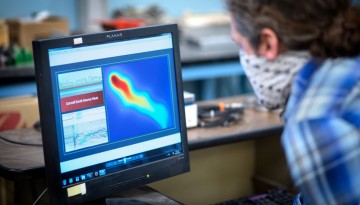
A new study describes a breakthrough method for imaging the physical and chemical interactions that sequester carbon in soil at near atomic scales, which may have implications for mitigating climate change.
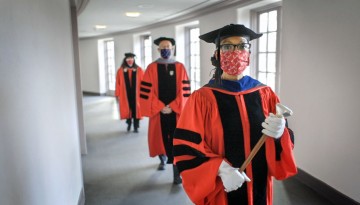
On Dec. 19, nearly 1,500 Cornell students celebrated their winter graduation in a virtual recognition ceremony viewed around the world – the first such event at Cornell, and a fitting end to what President Martha E. Pollack called “a semester like no other at Cornell.”
By delving into scientific and economic data, Cornell engineers have examined whether New York could achieve a statewide carbon-neutral economy by 2050. Their finding: Yes – and with five years to spare.
By using a radio telescope array, a Cornell postdoc and an international team of scientists may have detected emissions from a planet beyond our own solar system.
Each year, the Center for Teaching Innovation grants funding through the Innovative Teaching & Learning Awards to help faculty explore new strategies and tools for enhancing student learning.