Using white blood cells to ferry potent cancer-killing proteins through the bloodstream, Cornell researchers have confirmed a new way to kill metastatic cancer tumors.
A new program modeled on the Rhodes Scholarship will include three Cornellians among its 111-member inaugural class: Juliana Batista ’16, Atticus DeProspo ’15 and Andrew Schoen ’12. They were chosen among 3,000 applicants.
Cornell biomedical engineers have found natural triggers that can override developmental, biological miscues – research that could reduce the chance of congenital heart defects.
Nearly half of the more than 900 January degree candidates took part in the Dec. 19 recognition ceremony, held before thousands of family and friends in Barton Hall.
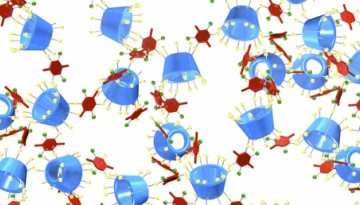
A team of Cornell researchers has used cyclodextrin, the same material found in the air freshener Febreze, to develop a technique that could revolutionize the water-purification industry.
A Cornell graduate student employed two-pulse photovoltaic correlation to measure the speed of his team's ultrafast photodetector in research published in Nature Communications, Nov. 17.
Cornell hopes to bring nanotech to young students in the area with the establishment of CNF Ambassadors, an outreach program being run by the Cornell NanoScale Science and Technology Facility.