TeraPore Technologies, co-founded by Rachel Dorin, Ph.D. ’13, and its novel nanofiltration products are changing how the pharmaceutical industry is reducing risk of harmful virus contamination in biological drugs.
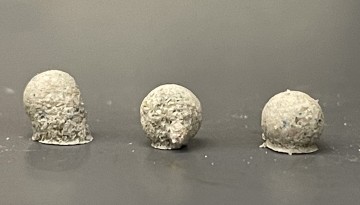
Andela Products, an upstate New York business, teamed up with Ryan Greene ’23, M.Eng. ’24, a student in materials science and engineering, to research how waste glass can be turned into an agricultural fertilizer.
The newest episode of a podcast hosted by Entrepreneurship at Cornell, Startup Cornell, features Andrea Ippolito ’06 MEng ‘07, CEO and founder of SimpliFed.
SimpliFed has launched and scaled a maternal health operating system,…
A motion simulator, collision avoidance system, and cybersecurity test for spacecraft are among the projects supported by inaugural grants from the Cornell-led New York Consortium for Space Technology Innovation and Development.
A gift establishing the Professor William Maxwell '56 Fellows will financially support research professors and students affiliated with Cornell's Engineering Innovations in Medicine initiative.
A new study provides the strongest evidence yet that the Earth's inner core began to decrease its speed around 2008, moving slower than the planet’s surface.
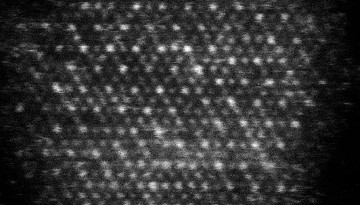
An interdisciplinary team developed a backchannel method that uses solubility, not entropy, to overcome thermodynamic constraints and synthesize high-entropy oxide nanocrystals at lower temperatures.
An interdisciplinary Cornell research team has developed a new surgical technique that blocks the spread of focal epileptic seizures in the brain by making precise incisions with femtosecond laser pulses.
The Center for Research on Programmable Plant Systems is welcomes the 2024 cohort of the National Science Foundation-funded Research Experiences for Undergraduates program.