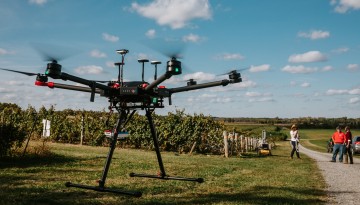
Students can now choose a new minor in digital agriculture, a multidisciplinary field focused on food and agriculture production systems, but with an increasingly broader span of applications and interests.
To prepare for extreme heat waves around the world, running climate-simulation models that include a new, efficient computing concept may save tens of thousands of lives.
Researchers studying the formation of the Earth’s crust and wearable technology for daily-life applications are among those at Cornell who recently received National Science Foundation Faculty Early Career Development Awards.
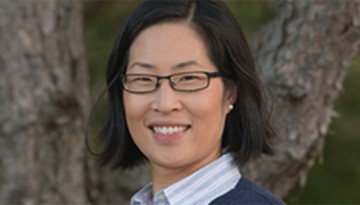
Cha, whose research focuses on topological and two-dimensional nanomaterials, will lead the Cornell NanoScale Science and Technology Facility, a national open-user nanofabrication facility for university-based researchers, industry, and startups.
After an exciting summer of research, students from the Cornell Bowers CIS BURE program shared their results with faculty, mentors, and fellow students.
Nearly 200 new first-year and transfer students from 49 countries participated in Prepare, a virtual and in-person preorientation for international undergraduates, offered by the Office of Global Learning, part of Global Cornell.
Many medical studies record a patient’s race using only the broad categories from the U.S. Census, which may conceal racial health disparities, a new Cornell-led study reports.
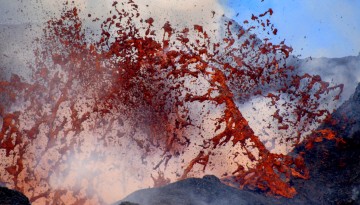
Geoscientists have long thought that water helps to drive volcanoes to erupt. Now, thanks to new tools at Cornell, scientists show that carbon dioxide can induce explosive eruptions.