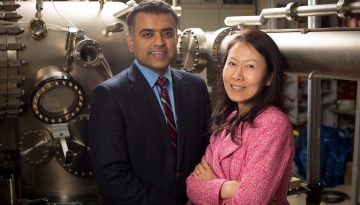
A group of researchers led by Cornell is unlocking the full potential of aluminum nitride – an important material for the advancement of electronics and photonics – thanks to the development of a surface cleaning technique that enables high-quality production.
A mummified bird – and the research into its historical context and extraordinary afterlife – will be on display in an exhibition that runs Oct. 7-9, from 9 a.m. to 7 p.m., in Upson Hall’s Lounge 116.
Halomine and Inso Biosciences – both from Cornell incubators – have received $3 million in New York state grants to help thwart disease outbreaks and expand the state’s life science industries.
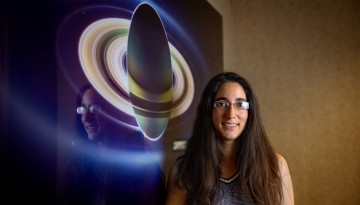
When NASA’s 990-pound Dragonfly rotorcraft reaches the Selk crater on Saturn’s moon Titan in 2034, Cornell’s Léa Bonnefoy '15 will have helped it to make a smooth landing.
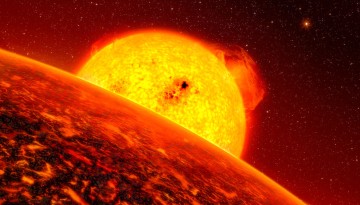
As surveying the cosmos for the new James Webb Space Telescope gets hot, Cornell researchers have modeled and synthesized lava in order to discover far-away, volcanic exoplanets.
Cornell has led research operations at the observatory since the 1960s, when NASA began sending people to space and scientists wanted to learn more about the physics of space weather.