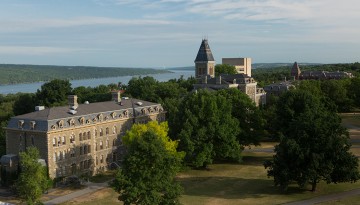
President Martha E. Pollack announced the faculty members honored with the Stephen H. Weiss Awards, which recognize excellence in undergraduate teaching and mentoring.
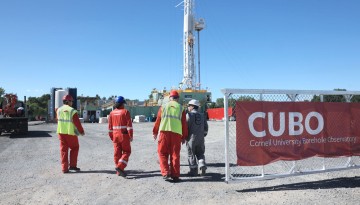
The Cornell University Borehole Observatory provides a platform to directly study the temperature, permeability and other characteristics of the rock deep beneath the Ithaca campus – factors that will help the university determine whether to move forward with a proposed plan to warm the Ithaca campus with Earth Source Heat.
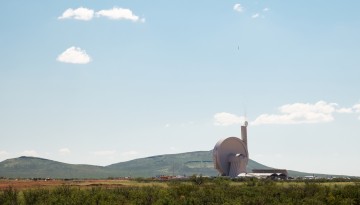
After successfully launching small spacecraft out of a novel suborbital accelerator, Cornell Engineering faculty and students may have exciting new opportunities to expand research and exploration of ChipSats.
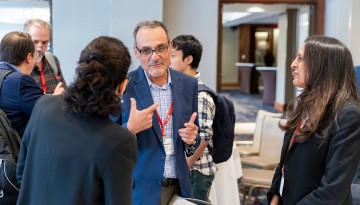
More than 70 faculty from Weill Cornell Medicine, Cornell Engineering and Cornell Tech assembled Oct. 1 at the Statler Ballroom — and more joined remotely — to kick off the Cornell Engineering Innovations in Medicine initiative.
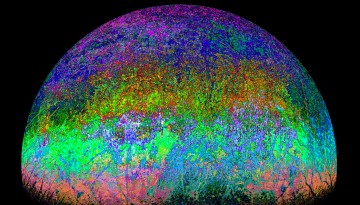
For Cornell scientists, new images from NASA’s Juno spacecraft flyby Sept. 29 of Jupiter’s moon Europa – an icy, oceanic world that may host life – brings future mission into frigid focus.
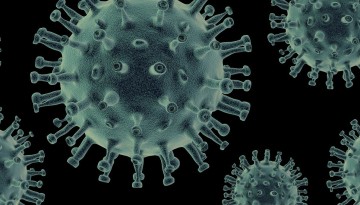
A new Cornell research project aims to gain a better understanding of how populations of microbes interact on surface environments, such as human skin, where their dynamics are not fully understood.
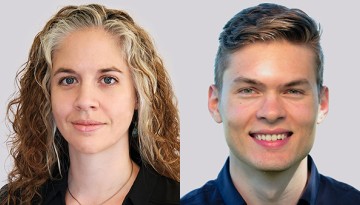
Two Cornell graduates, CEOs of Praxis clients REEgen and Soctera, benefit from the vibrant innovation ecosystem at Cornell and Activate’s immersive fellowship program for science entrepreneurs.
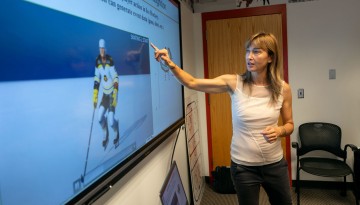
The algorithms are unique in that they take a holistic approach to action anticipation, combining visual data – where an athlete is located on the court – with information like an athlete’s specific role on the team.