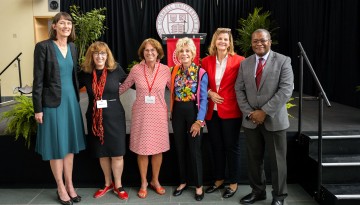
Three of the four generations of Meinigs who have attended Cornell thus far were on hand to accept the award, which recognizes engineering alumni whose leadership and vision have transformed the world and brought distinction to the College of Engineering and Cornell.
Solving problems like climate change could require dismantling rigid academic boundaries, so that researchers of various backgrounds may collaborate through an “undisciplinary” approach.
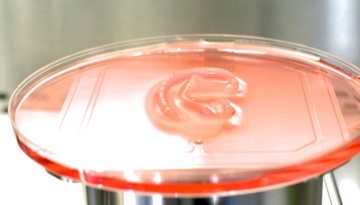
In a first-of-its-kind clinical trial, a human has received a 3D-bioprinted ear implant grown from the patient’s own living cells – thanks to a technology platform developed by a Cornellian-founded startup company.
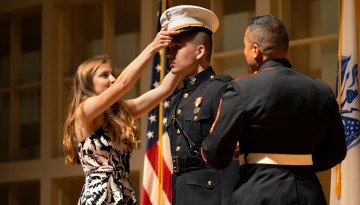
A dozen graduating ROTC seniors were among 19 members of Cornell's Tri-Service Brigade who earned commissions in the Army, Navy, Air Force and Marines during a May 27 ceremony in Alice Statler Auditorium.
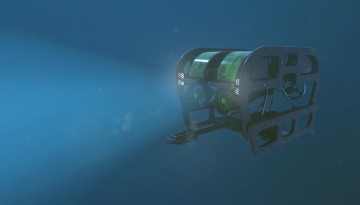
The team created and tested a new imaging approach which integrates information about where objects might be located with sonar processing algorithms that decide the optimal views.
The discovery made by two doctoral students could have future implications for human health, setting a path for research into understanding brain function.
Cornell researchers designed a micro-sized artificial cilial system that could eventually enable low-cost, portable diagnostic devices for testing blood samples, manipulating cells or assisting in microfabrication processes.
Cornell startup Antithesis Foods and Bactana were awarded NSF small-business grants, as Guard Medical raises $11 million in Series B investments and C2i launches a disease test in Europe.
Through their work on the dynamics of liquid mixtures, scientists have developed a new approach to the problem of cleaning sensitive, electronic surfaces.