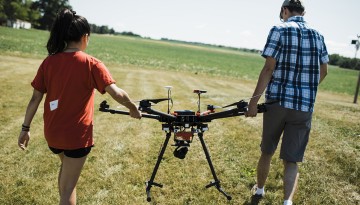
A $1 million grant supports a project to integrate and analyze agricultural data from aerial drones, ground robots, satellites and mobile apps, to benefit crop breeders, farmers and consumers.
A new database allows users to search any U.S. ZIP code address to learn about extreme weather concerns like hurricane or wildfire exposure, and to find nearby problematic environmental sites.
New research from Cornell scientists is exploring how human genetics impacts functions of the gut microbiome, and is expanding awareness of the role human genetics plays in shaping the microbiome.
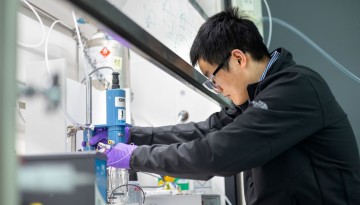
In making hydrogen a viable, clean-energy alternative to carbon-based fuels, Cornell and two research-startups have joined a consortium that aims to propose a Northeast research hub.
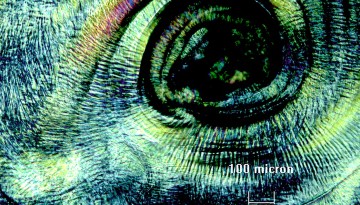
A Cornell-led project has created synthetic nanoclusters that can mimic hierarchical self-assembly all the way from the nanometer to the centimeter scale, spanning seven orders of magnitude.
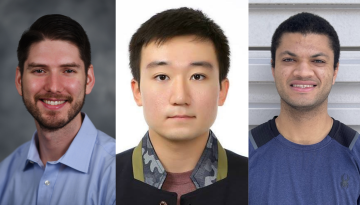
Four doctoral candidates and one doctoral alumnus were inducted into the Cornell chapter of the Bouchet Graduate Honor Society, which recognizes scholarly achievement and promotes diversity in doctoral education.
The newest cohort of Ph.D. candidates in Cornell Engineering's Commercialization Fellowship will spend the remainder of the year learning the skills and tools to bring their technologies to market.
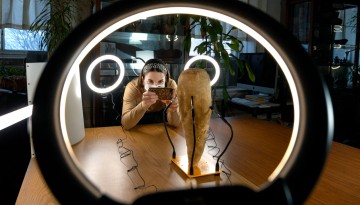
Master’s student Carol Anne Barsody is working with an array of interdisciplinary collaborators to explore the origins of a mummified bird and create a multisensory exhibition that rethinks the way ancient artifacts are presented in museums.