Cornell Engineering has launched the Veho Institute for vehicle intelligence, formally partnering Cornell with Italian universities and luxury automakers, and establishing a new academic center at Cornell Tech.
A new system developed by Cornell Tech researchers will allow thousands of patients of community health care workers in rural Africa to use a basic tool on their mobile phones to provide feedback about their care.
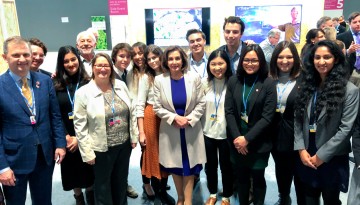
U.S. House Speaker Nancy Pelosi visited with Cornell students at the 25th annual United Nations’ Conference of the Parties climate change conference, Dec. 3 in Madrid, Spain.
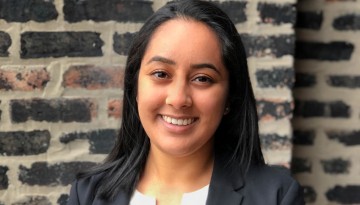
Medical student Nina Acharya ’19, one of 11 newly elected Rhodes Scholars from Canada, will go to Oxford University next fall to study children’s nutrition interventions in vulnerable communities.
On Nov. 18, Cornell leaders, faculty, alumni, collaborators and friends celebrated the university’s long history of collaboration with China with two events in Beijing: an academic symposium and a Cornell-China forum.
Researchers from the University of Hyderabad in India and the College of Veterinary Medicine have identified a compound that could be part of a strategy to improve the effectiveness of the dengue vaccine.
Five Cornell faculty members have been elected fellows of the American Association for the Advancement of Science, the world’s largest general scientific society.
A systematic review on the benefits and safety of fortifying wheat or maize flour with folic acid and population health outcomes was led by scientists in the Division of Nutritional Sciences.