A team led by physics associate professor Eun-Ah Kim has proposed a topological superconductor made from an ultrathin transition metal dichalcogenide that is a step toward quantum computing.
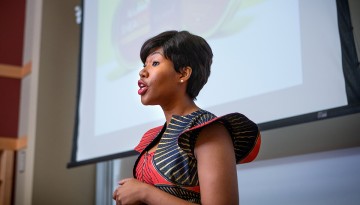
Students from 11 startup companies with products including organic skin care products and concussion detection devices pitched their ideas March 20, vying for the 2017 Student Business of the Year.
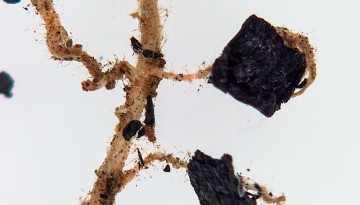
Cornell scientists have discovered a new high-definition system that allows electrons to travel through soil farther and more efficiently than previously thought, according to Nature Communication, March 31.
Barbara Knuth, senior vice president and dean of the graduate school, sent a message to the Cornell community about the graduate assistant vote on unionization. At this time the results are inconclusive.
Cornell administrators, staff and faculty discussed possible changes in immigration policy and their impacts on university students with DACA status at a panel discussion March 17.
Researchers have devised a method of two-way radio communication that puts the separation of the transmitting and receiving signals all on a single transceiver chip.
Steven Powell, senior engineer in electrical and computer engineering, is leading a Cornell group that has sent a project up to the International Space Station to study the ionosphere.
"Immigration Chaos: DACA Students and Higher Education Grapple With Upheaval," a panel discussion, will be held Friday, March 17, at noon in Kennedy Hall's Call Alumni Auditorium.