More than 30 students presented their research on a wide range of topics during the 35th Cornell Undergraduate Research Board Spring Symposium, held virtually May 4-7.
The Kaplan Family Distinguished Faculty Fellowship recognizes faculty members who have had a significant impact on undergraduate, professional or graduate education at Cornell by involving their students in service-learning programs.
The College of Human Ecology on May 1 held its fourth annual HumEcathon, a hackathon-style design challenge bringing together 27 undergraduates to work in multidisciplinary teams on diversity, equity and inclusion initiatives on campus.
When the U.S. began distributing COVID-19 vaccines this winter, Jordan Tralins ’23 found it odd that her social media feeds didn’t have any factual information about the shots. Tralins decided to do something about it.
Normal blood levels of vitamin D don’t affect one’s susceptibility to getting COVID-19 or the severity of infections, according to new research led by Bonnie Patchen, a doctoral student in the field of nutrition.
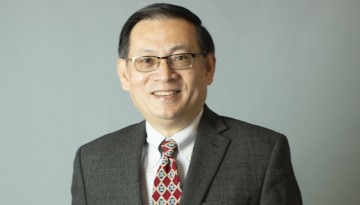
Shaoyi Jiang, Ph.D. ’93, the Robert S. Langer ’70 Family and Friends Professor in the Meinig School of Biomedical Engineering, discusses his research on functional zwitterionic materials for biomedical and engineering applications.
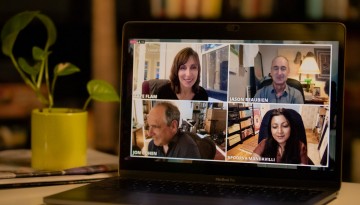
From flame wars on twitter to sleepless nights, four of the country’s leading science journalists spoke of the challenges they’ve faced covering the COVID-19 pandemic during an April 28 event hosted by the College of Arts & Sciences.
Weill Cornell Medicine researchers say the study’s findings suggest patients with brain bleeds should be screened more aggressively for problems related to clotting disorders.
Maureen Hanson, professor of molecular biology and genetics, and Bernice Grafstein, professor of neuroscience at Weill Cornell Medicine, have been elected to the American Academy of Arts and Sciences.