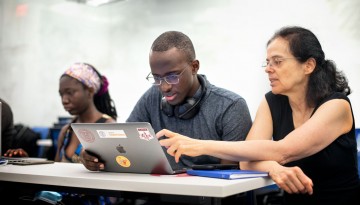
Diversity is a major priority of the Cornell Ann S. Bowers College of Computing and Information Science, and three summer offerings – CSMore, SoNIC and the Designing Technology for Social Impact Workshop – demonstrate that commitment.
Black patients who have chronic liver failure, also known as end-stage liver disease, are less likely to be placed on a waiting list for a life-saving liver transplant than other racial and ethnic groups, according to a study.
Jensen, who is committed to advancing diversity, will lead the team that awards hundreds of millions of dollars annually in support of Cornell’s need-blind admission and affordability policies.
Cornell researchers are using satellite imagery to protect endangered and damaged cultural heritage in the South Caucasus, where an ethnic conflict between Armenia and Azerbaijan has raged for decades.
Black citizens in early America confronted a "national double-speak" in which white Americans celebrated freedom while supporting the enslavement of Black people.
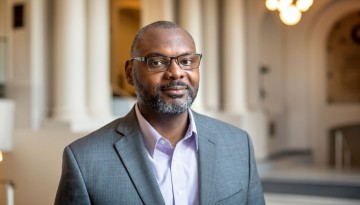
Mark E. Lewis, director of the School of Operations Research and Information Engineering, and Jamila Michener, associate professor of government, are the recipients of this year’s Faculty Award for Excellence in Research, Teaching and Service through Diversity.