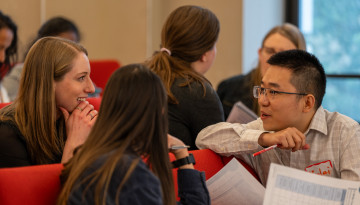
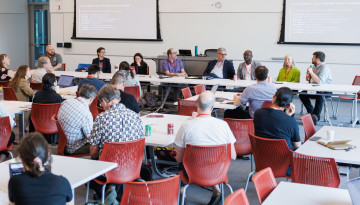
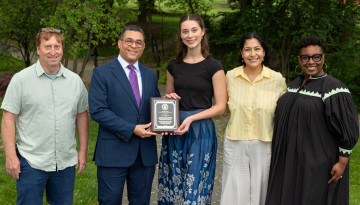
The Center for Teaching Innovation's Graduate Teaching Fellows program is celebrating 15 years of supporting the next generation of professors with graduate training to help them prepare for their future teaching.
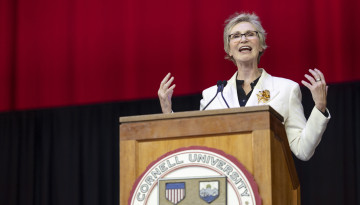
In her Senior Convocation address on May 21 in Barton Hall, Jane Lynch, MFA ’84, told the Class of 2026 to do their best to overcome their fears, don’t subscribe to cultural memes, and be kind and generous.
Large numbers of college students are now using artificial intelligence to complete – and cheat on – their assignments, suggesting that colleges and universities need to change how they are evaluating students.
Amid concern about democratic backsliding globally, the center will mobilize scholars to strengthen democracy through rigorous research, democratic education and public engagement.
Targeting tumor-specific inflammatory processes in colorectal cancer could enhance the efficacy of some anticancer therapies and prevent drug resistance, Weill Cornell researchers have found.
For her volunteer outreach encouraging local children to learn about physics and reading, Abra Geiger ’26 has won the 2026 University Relations Campus-Community Leadership Award.
Justice-impacted individuals with disabilities are considerably less likely to be employed than people with disabilities who have not interacted with the criminal justice system, according to Yang-Tan Institute research.
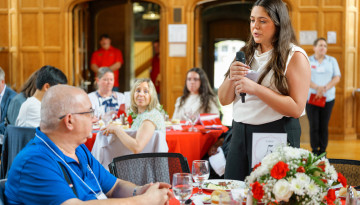
The 38th annual Merrill Presidential Scholars luncheon was held May 19 at Willard Straight Hall, celebrating the high school and Cornell mentors who inspired the latest group of scholars.