Alexis Boyce, program manager for the Asian American Studies Program, has been honored with the Employee Assembly's Award for Staff Inclusion and Integrity.
A decline in estrogen during menopause causes changes in body fat distribution and associated cardiovascular and metabolic disease, but a new Cornell-led study identifies potential therapies that might one day reverse these unhealthy shifts.
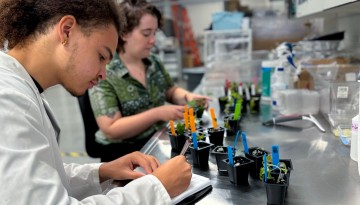
The Bowers Undergraduate Research Experience is a 10-week summer program where Cornell undergraduates are paired with one of nearly 40 faculty mentors and their doctoral students to tackle a specific research project.
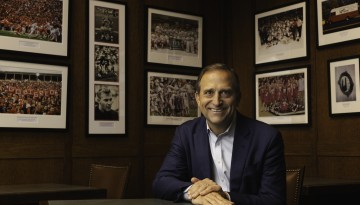
The newest episode of “Startup Cornell,” a podcast hosted by Entrepreneurship at Cornell, features Josh Gully ’83, managing director of NewEdge Wealth.
On July 1, Cornell Law School and Cornell Tech welcomed David Reiss to their faculties as clinical professor of law and research director of the Blassberg-Rice Center for Entrepreneurship Law.
More than 100 Arts and Sciences students were awarded Summer Experience Grants, which help students pay for housing, food, transportation and other expenses while they undertake minimally paid or unpaid summer internships or positions.
Since 1986, STEP has been addressing the underrepresentation of marginalized students in science, technology, engineering and math through programs at more than 50 universities across New York.