What are the options for limiting harm as AI use grows? This is one of the questions a network of international colleagues are tackling in a research collaboration launched with a 2022 Joint Research Seed Grant from Global Cornell’s Global Hubs initiative. This year’s cycle of Global Hubs seed grants recently opened.
The upcoming International Fair is poised to spark students’ interest in the world on Wednesday, Aug. 28, from 11 a.m to 1:30 p.m. on the Uris Hall Terrace.
Cornell researchers have demonstrated that acoustic sound waves can be used to control the motion of an electron as it orbits a lattice defect in a diamond, a technique that can potentially improve the sensitivity of quantum sensors and be used in other quantum devices.
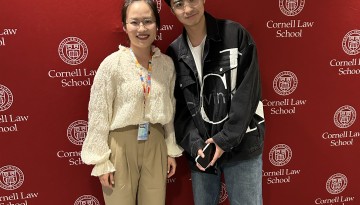
On August 8, Cornell Law School welcomed 129 accomplished and enthusiastic students from around the world to Orientation for their one-year Master of Laws (LL.M.) graduate program.
Jeffery Sobal, a sociologist whose work focused on the social causes and consequences of obesity, eating relationships and food systems, died Aug. 3. He was 74.
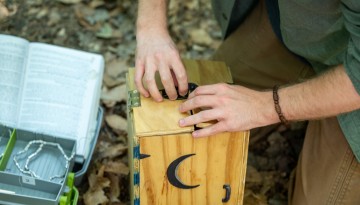
Scientists build a small "outhouse" to collect fecal samples from woodpeckers. They want to uncover the role that woodpeckers play in the emerald ash borer invasion.
First-year and transfer students gathered Aug. 25 at Schoellkopf Field for New Student Convocation, where they were encouraged to pursue their ambitions while upholding the shared values of the community.
Projects across Cornell are exploring how the university's grasslands – from hayfields to campus lawns – can protect birds, encourage biodiversity and sequester carbon to fight climate change.