Cornell researchers have identified a switch that regulates inflammation caused by an immune response, a finding that could one day help to control inflammation-related conditions.
A new study provides evidence that a spillover of avian influenza from birds to dairy cattle across several U.S. states has now led to mammal-to-mammal transmission – between cows and from cows to cats and a raccoon.
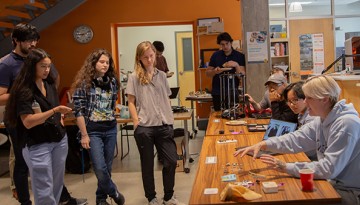
The Protofacturing Hardware Accelerator supports physical product startups that have developed a proof-of-concept prototype and are preparing for initial manufacturing runs. Participants will refine their initial prototypes to create engineering prototypes while continuing to engage in customer discovery and securing funding for upfront manufacturing costs.
Nicolas van de Walle, the Maxwell M. Upson Professor of Government in the College of Arts and Sciences, who played a formative role in the field of comparative politics, died on July 15. He was 67.
Cornell Engineering researchers are part of a research group that has applied a new X-ray-based reconstruction technique to observe topological defects in a nanoscale self-assembly-based cubic network structure of a polymer-metal composite material.
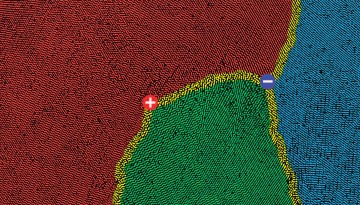
A supercrystal formation previously unobserved in the thin-film Mott insulator Ca2RuO4 was discovered by a Cornell-led research team, potentially unlocking new ways to engineer materials and devices with tunable electronic properties.
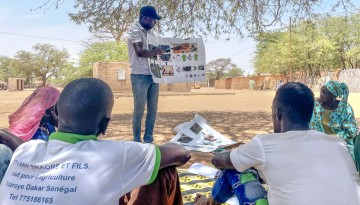
Cornell and global researchers are finding ways to control disease-carrying aquatic plants in Senegal by turning the flora into inexpensive compost or livestock feed – and helping the economy.
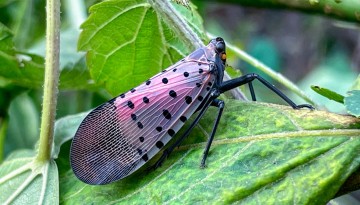
The New York State Department of Agriculture and Markets identified the invasive pest in Romulus, New York, following reports from Cornell’s New York State Integrated Pest Management Program.