Researchers studying antimicrobial-resistant E. coli – the leading cause of human death due to antimicrobial resistance worldwide – have identified a mechanism in dogs that may render multiple antibiotic classes ineffective.
Quagga mussels – the deleterious invasive species from Eastern Europe seen throughout Oneida Lake – may provide an unexpected benefit for the life cycle of mayflies: They’re flourishing.
An international research team discovered that the gas in a Hyper Luminous Infrared Galaxy was rotating in an organized fashion, rather than in the chaotic way expected after a galactic collision –– a surprising result.
Alistair Hayden brings his West Coast experience in wildfires and earthquakes to help New York communities maintain health and become more disaster resilient in the face of climate change.
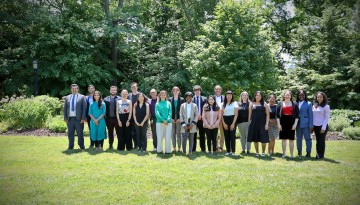
The summer 2024 Colman Inclusive Leadership Program helped 33 doctoral students enhance their leadership skills through readings, interactive group activities, case studies and discussion through the three-day immersive experience.
Abruña was selected in the “non-traditional energy” category for “foundational contributions spanning electrochemistry, batteries, fuel cells and molecular electronics.”
The July 30-Aug. 3 experience for young artists will culminate with a series of concerts, presentations and roundtable discussions featuring distinguished performing artists, teachers and “rising stars."