Shaoyi Jiang, Ph.D. ’93, the Robert Langer ’70 Family and Friends Professor in Cornell’s Meinig School of Biomedical Engineering, has been elected a fellow of the National Academy of Inventors for his pioneering work with zwitterionic materials.
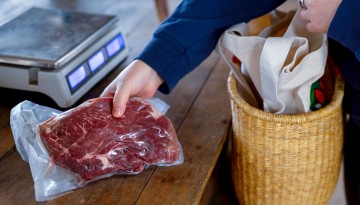
Cornell researchers partnered with 10 New York state livestock farmers using devices that record sales and process credit card payments and analyzed market transactions to better understand customer behavior and help farmers increase their profits at farmers markets.
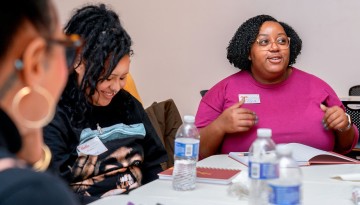
A new working group, co-founded by Cornell faculty, invites a community of Black scholars, educators and activists to reflect on their girlhoods – all in order to better serve the Black girls with whom they work.
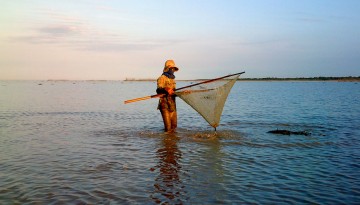
A new study, which brought together Cornell researchers, Cambodian fishers and Cambodian researchers, had study participants take photos that researchers then use to facilitate interviews and group discussions during which the subjects share their life experiences and perspectives.
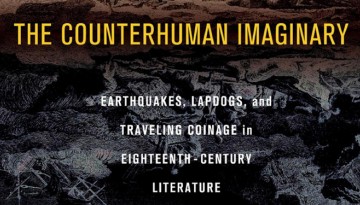
Laura Brown's research looks beyond “the singular, autonomous, rational, human protagonist" to find that many other-than-human presences appear in literature – with a lot to say to readers.
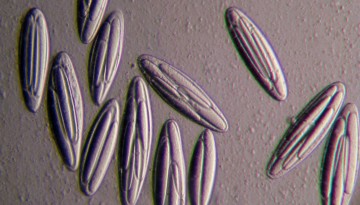
Cornell researchers and colleagues have for the first time described the near-complete genome of a rare bacterium so large it’s visible to the naked eye. The bacteria, which they’ve named Epulopiscium viviparus, lives symbiotically within some tropical marine surgeonfish.
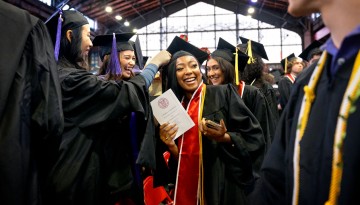
Jessica Hong ’20, Henley Schulz ’22 and Andrew Talone ’24 are members of the 2024-25 cohort of Schwarzman Scholars, an international program that nurtures a network of future global leaders.
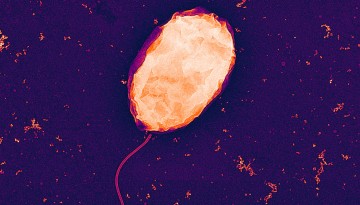
A hard-working bacterium may soon have a large influence on processing rare-earth elements that help run smartphones, electric cars and wind turbines in an eco-friendly way.