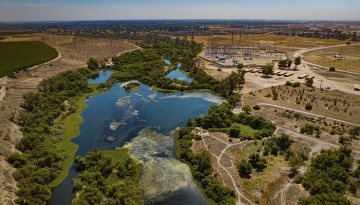
Cornell Atkinson faculty fellows Greeshma Gadikota and Phillip Milner have won Carbontech Development Initiative grants to develop carbon removal technologies.
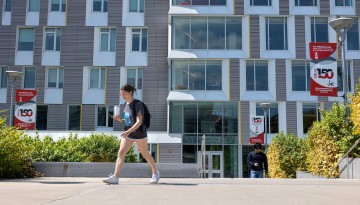
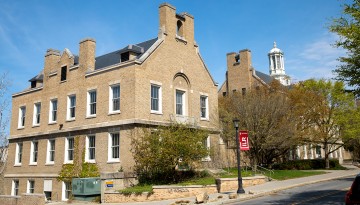
The Sibley School of Mechanical and Aerospace Engineering held a kick-off event for their months-long celebration of the 150th anniversary of mechanical engineering at Cornell. The evening also doubled as the official launch of a new space technology podcast hosted by two faculty members.
CRP Associate Professor Jennifer Minner and the Just Places Lab team at Cornell AAP map local sites demonstrating the challenges of creating circular construction economies and the opportunities there are in reusing building materials.
Engineering students explored how freedom of expression intersects with complex issues like algorithmic bias, law enforcement surveillance and code-switching in the workplace as part of the Undergraduate Students Present About Research and Knowledge competition.
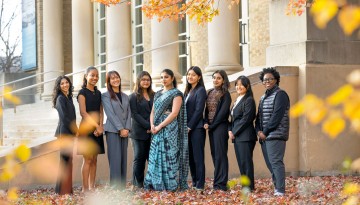
The student group Women Leaders of Color hosts events open to all students and aims to increase representation of women of color in leadership positions across professions.
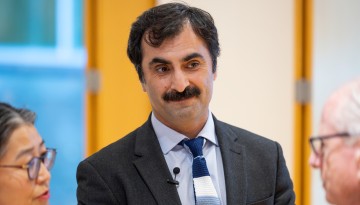
After his family was forced to flee a government crackdown in Turkey, Florida State University sociologist Azat Gündoğan found a "lifeline" at Cornell as an International Institute of Education’s Scholar Rescue Fund fellow.
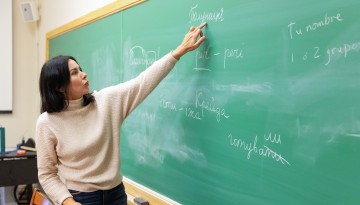
A few times a week, songs from Ukraine can be heard coming from a classroom in Goldwin Smith Hall, as Cornell’s Ukrainian program brings the country’s culture to campus through language learning, folk tradition and history.
An interdisciplinary collaboration used paleo information and reconstructed weather scenarios to better understand California’s flood and drought risks and how they will be compounded by climate change.
Project findings are expected to yield richer detail on the experiences of Black workers in the South and may translate to more impactful organizing efforts in the future.