The Consider Cornell programming series, created by the Graduate School Office of Access and Recruitment, seeks to provide guidance to prospective graduate students on the next step in their academic journeys.
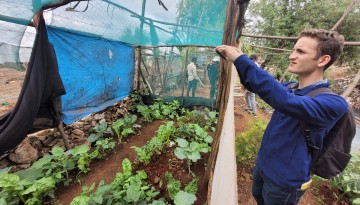
Five undergraduate students from across the country came to Cornell for a summer research experience with the Center for Research on Programmable Plant Systems (CROPPS).
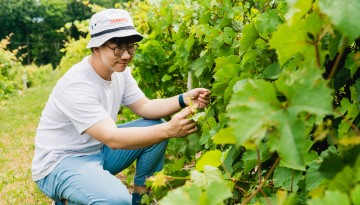
The Bruce Reisch 1976 Graduate Fellowship in Grapevine Improvement, funded by an anonymous donor, is helping horticulture doctoral candidate Hongrui Wang to safeguard the future of grape growing in New York state.
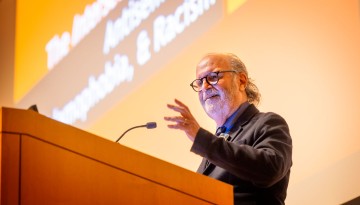
Professor Ross Brann discussed how racist depictions of the behavior and appearance of Jews and Muslims encouraged ancient peoples to view them as others in a talk held Nov. 16 in the Alice Statler Auditorium in Statler Hall.
The Laidlaw Leadership and Research Program at Cornell develops students into ethical leaders and global citizens. The program, hosted by the Mario Einaudi Center for International Studies, strengthens students’ research and leadership skills over two years through work on international research projects, leadership training, participation in hands-on learning experiences, and global networking.
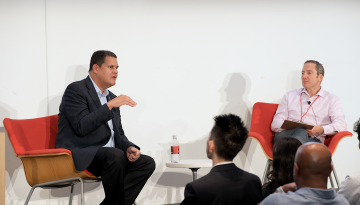
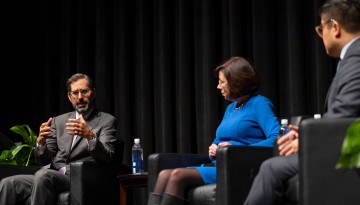
Journalists find themselves challenged by mistrust and polarization from both sources and audiences, according to experts at a recent panel as part of Cornell’s Freedom of Expression theme year.