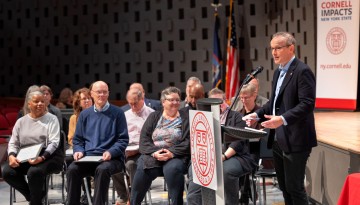
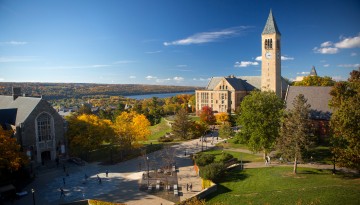
To underscore how local partnerships improve Cornell, Ithaca and Tompkins County, the university presented the 13th annual Cornell Town-Gown Awards to three student-community collaborations.
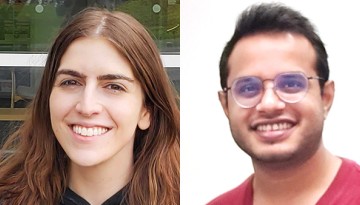
Julie Heffler and Avilash Singh Yadav are the recipients of the 2023 Fleming Research Fellowships, which support young researchers who are doing cutting-edge work in basic biomedical sciences and are planning careers in biological or medical research.
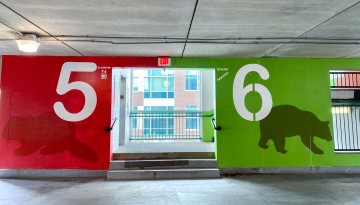
An interdisciplinary team of students designed a new signage system for a downtown Ithaca parking garage that employs colors and animal imagery to help drivers.
Surveys tease apart how cat owners’ and veterinarians’ views may each be contributing to overuse of the only long-acting, injectable antimicrobial for use in cats, called cefovecin.
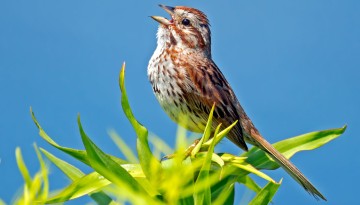
North American song sparrows may be more resilient to climate change thanks to a remarkable adaptation: a stunning range of body sizes found throughout the bird’s westernmost range.
Three years after the disruptions of 2020, teaching and research continue to be immensely different from pre-pandemic times, according to scholar Debra Castillo.
Leo Taylor, Ph.D. ’15, delivered the 2023 Building Allyship Initiative Keynote talk, “Supporting Trans and Nonbinary People During Turbulent Times,” and shared ways for individuals to become aspiring allies.
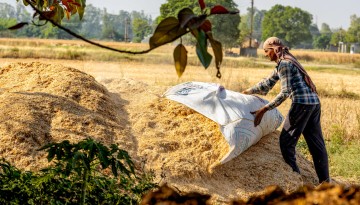
New maps, made from a global dataset of crop residues, reveal areas where biochar may be sustainably produced, offering a path to lowering atmospheric carbon dioxide, a greenhouse gas.