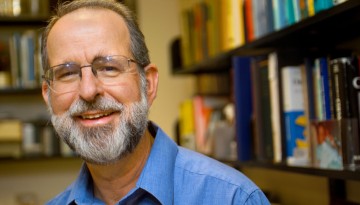
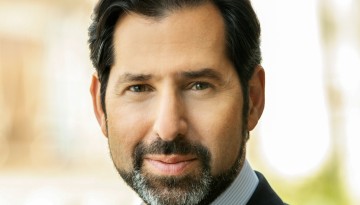
Frank DiSalvo, a chemist-physicist who inspired hundreds of Cornellians from different disciplines to collaborate on environmental and sustainability problems, died on Oct. 27 in Atlanta, Georgia. He was 79.
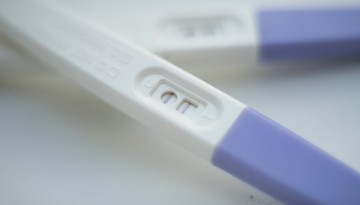
Pre-Dobbs, women in states that severely limit access to abortion were 13% more likely to have a live birth resulting from an unintended pregnancy than those in states where abortion care was more accessible, Brooks School researchers found.
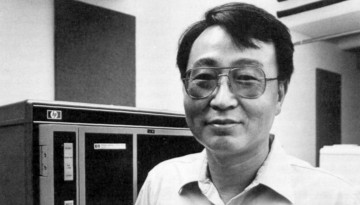
Hwa Chung “H.C.” Torng, M.S. ’58, Ph.D. ’60, professor emeritus of electrical and computer engineering, who invented a mechanism that helped advance high-speed computer processing, died March 31 at the John Muir Medical Center in Walnut Creek, California. He was 90.
NPR’s David Folkenflik ’91, the Zubrow Distinguished Visiting Journalist in the College of Arts and Sciences, will moderate a panel of noted journalists and faculty to discuss how the news media is navigating an era of political polarization amid shrinking newsrooms.
A hardware accelerator initially developed for artificial intelligence operations successfully speeds up the alignment of protein and DNA molecules, making the process up to 10 times faster than state-of-the-art methods.
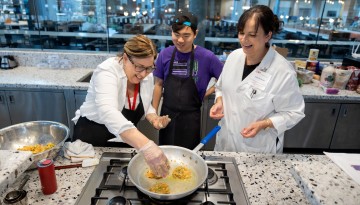
The College of Human Ecology has received a $10 million commitment from Joan Klein Jacobs ’54 and Irwin M. Jacobs ’54, BEE ’56 to support the college’s new Center for Precision Nutrition and Health.