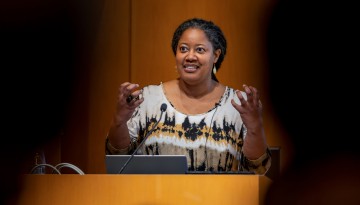
Fantasy author N.K. Jemisin spoke Oct. 4 at the Bartels World Affairs Lecture, hosted by the Einaudi Center, in a talk focused on how to investigate our world and beliefs about it, and how to use what we learn to imagine and construct a better future.
The work and accomplishments of 19 Cornell Cooperative Extension summer interns were celebrated at a reception, held Sept. 26 in the Biotechnology Building.
The percentage of students who reported experiencing one or more specific forms of harassing behaviors rose slightly to 45% this year from 44% in 2021, according to the 2023 Cornell Survey of Sexual Assault and Related Misconduct.
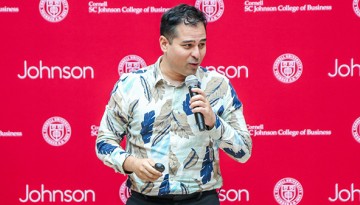
After a 10-week summer program, twelve Johnson Summer Startup Accelerator (JSSA) student startups pitched their companies and shared their progress at Demo Day on Sept. 9 at the Sage Atrium in Ithaca, New York.
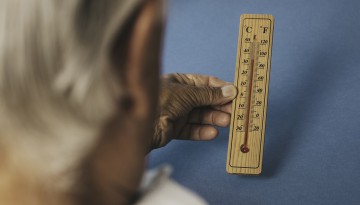
Cornell experts have launched the Aging and Climate Change Clearinghouse to promote research, policies and activism addressing the need to protect vulnerable older adults in the face of climate challenges.
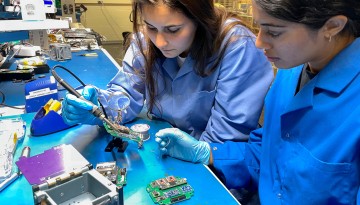
Cornell is spearheading the New York Consortium for Space Technology Innovation and Development – a new initiative aimed at bolstering U.S. space technology research and manufacturing by uniting industry, academic and government partners.
Novelist and short-story writer Manuel Muñoz, M.F.A. ’98, has been awarded a $800,000 “genius grant” from the John D. and Catherine T. MacArthur Foundation.