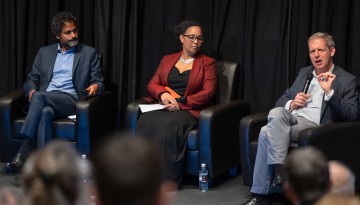
Leading First Amendment scholars Jameel Jaffer and Eugene Volokh discussed the scope and boundaries of freedom of expression for the first Milstein Symposium, held Sept. 26 in Myron Taylor Hall’s Landis Auditorium.
“All In” is the theme for the Cornell United Way campaign, a yearly campus drive that supports a community-wide fundraising effort by the United Way of Tompkins County for local nonprofits and those in need. The drive began Sept. 27.
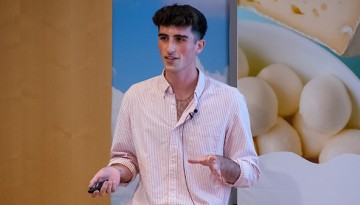
Twenty-eight student teams have been selected to participate in the 10th credit-bearing cohort of eLab, which accepts student founders from any field of study across Cornell and trains them to launch real businesses.
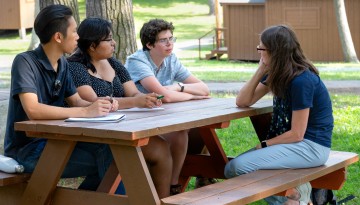
Through the Cornell Cooperative Extension Summer Internship Program, three urban and regional planning undergrads have created a land-use plan to help a 4-H camp develop an 85-acre tract near Canandaigua.
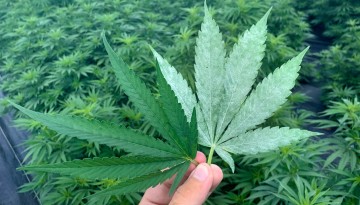
Researchers have discovered a gene in hemp that helps the plant resist powdery mildew, giving the fledgling hemp industry a new tool to combat the prevalent disease.
The work aims to understand how stem cells function to fuel normal tissue maintenance and to repair injuries in actively regenerative tissues, such as skin.
Researchers tracked the brain’s dopamine reward system and found – for the first time – this system flexibly retunes toward the most important goal when faced with multiple competing needs.