In new research, Jamila Michener, associate professor of government, demonstrates how people within racially and economically marginalized communities can, through organizing, build political power in response to poor living conditions.
Andrew Karolyi, the Charles Field Knight Dean of the Cornell SC Johnson College of Business, has been reappointed to the position for a five-year term, effective July 1, 2024, Provost Michael I. Kotlikoff announced Oct. 2.
Cornell scientists have replaced the harsh chemical processing of rare earth elements – used to power electric cars, wind turbines and smartphones – with a benign practice called biosorption.
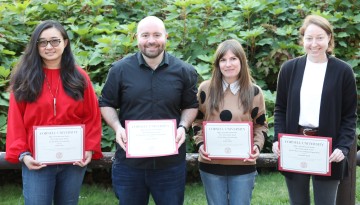
Six postdoctoral scholars were honored with Postdoc Achievement Awards as part of Cornell’s participation in National Postdoc Appreciation Week. The awards recognize excellence in community engagement, leadership and mentoring.
Diversity of thought regarding gamers’ opinions of games makes for better algorithms that help audiences around the globe pick the right games, according to new research from Cornell, Xbox and Microsoft Research.
Wang was chosen for “advancing our understanding of transcription, replication, and chromatin dynamics through the lens of DNA mechanics and topology.”