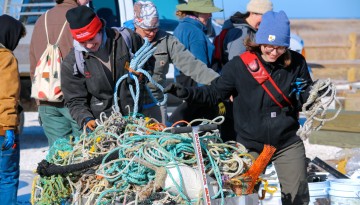
Fourteen students spent their spring break on a Massachusetts island, dismantling hundreds of discarded lobster traps, collecting sounds of the island and deepening their understanding of human impacts on marine life.
In his new book, “Stay Cool: Why Dark Comedy Matters in the Fight Against Climate Change,” history professor Aaron Sachs demonstrates how laughter can give you strength to persevere even when things seem most hopeless.
People today work substantially less than they did generations ago – not just because they have more money, but because of the virtually unlimited trove of cheap entertainment increasingly at their fingertips, according to new economics research.
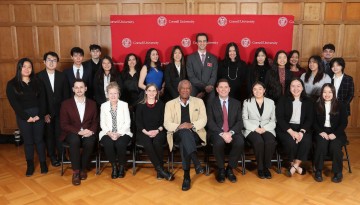
A diverse group of students and recent graduates representing Cornell’s four contract colleges has been selected to receive the 2023 State University of New York Chancellor’s Award for Student Excellence.
The student-run Translator-Interpreter Program, which trains bilingual and multilingual Cornell students to serve as volunteer translators and interpreters for community agencies, received the 27th annual James A. Perkins Prize for Interracial and Intercultural Peace and Harmony.
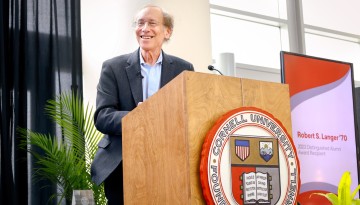
Robert Langer ’70, whose pioneering work in biotechnology, drug delivery and tissue engineering has made him one of the most prolific inventors in medicine, received the Cornell Engineering Distinguished Alumni Award during a celebration hosted April 19.
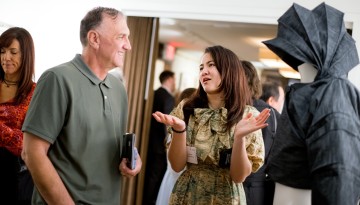
The College of Human Ecology’s first Cornell Fashion Expo, held April 14, gave student designers a chance to present their work to industry experts and Cornell alumni in New York City, one of the fashion capitals of the world.
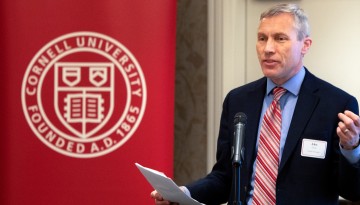
Community leaders and Cornell experts discussed issues such as childcare, remote and hybrid work, and housing and demographic trends at the Regional Town-Gown Conference, held April 18 at the Hotel Ithaca.