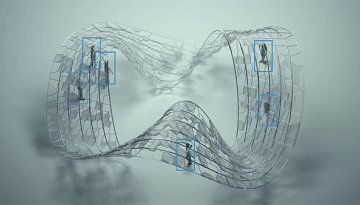
As part of a pilot collaboration between AAP and Cornell Tech, colleagues came together across disciplines to explore innovative ways of teaching and designing. Now, they are poised to take their ideas even further.
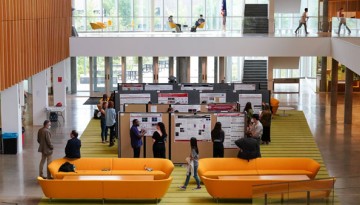
Students received their coats during the 21st annual Biomedical and Biological Sciences Symposium, an all-day event that kicks off the academic year for the program.
The Cornell University Police Department’s Crime Prevention Unit provides safety trainings and outreach, actively aiming to build connections between the community and the police.
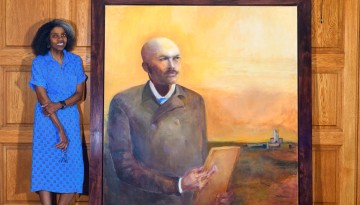
At age 36, George Washington Fields graduated as a member of the first class of Cornell Law School, the school’s first Black graduate and the only formerly enslaved person to graduate from Cornell.
Eleven 2030 Project grants were awarded to Cornell faculty for an array of fast-track climate solutions, including tools to help New York communities reduce their greenhouse gas emissions.
The 2023 Margaret Oakley Dayhoff Award is given each year to a woman who has achieved prominence while in the early stages of a career in biophysical research.
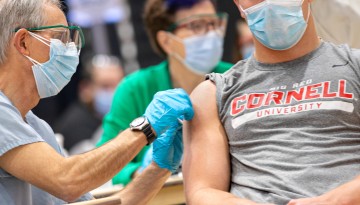
Six Cornell faculty members from three different colleges will work together to improve epidemiological models of infectious disease, including by better incorporating human behavior into the models, using a $1 million grant from the National Science Foundation.
To better equip leaders for a world where data-driven decision making is ubiquitous, Cornell’s Samuel Curtis Johnson Graduate School of Management welcomed its first class of students working towards an accelerated MSBA degree.
Cornell doctoral students Dory Peters and Joseph Miranda have been selected to receive 2022 Ford Foundation Fellowships. Honorable mentions were awarded to nine additional Cornell graduate students.