National 4-H Council awarded New York Gov. Kathy Hochul its Distinguished Alumni Medallion. Cornell Cooperative Extension runs the venerable youth program throughout the state.
NASA’s James Webb Space Telescope opens a new chapter in scientific history, as an international team – including Cornell astronomers – found carbon dioxide evidence on the exoplanet WASP-39b.
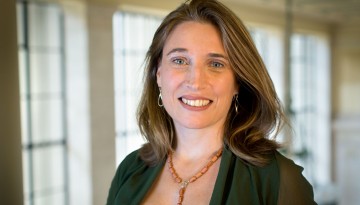
Krystyn J. Van Vliet, currently associate provost and associate vice president for research at the Massachusetts Institute of Technology, will join Cornell in 2023 as vice president for research and innovation.
Cornell Law School’s First Amendment Clinic was part of a team that won a precedent-setting ruling by a federal appeals court concerning the scope of amendments to the Freedom of Information Act.
New research from the ILR School suggests that people who work in industries with high levels of sexual harassment have a harder time identifying inappropriate workplace behavior.
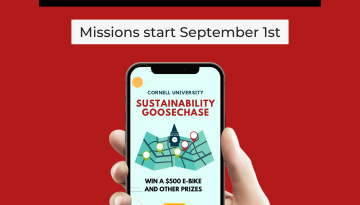
Students and employees can explore sustainability features of the Ithaca campus, and learn about programs like the sustainable events certification, sustainability & climate course list, and more by participating in the virtual scavenger hunt.
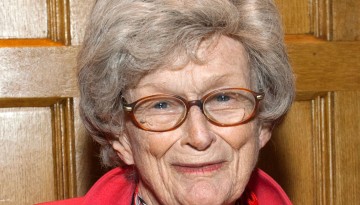
Trustee emerita and Presidential Councillor Patricia “Pat” Carry Stewart ’50, a longtime supporter of the university who was instrumental in the founding of the President’s Council of Cornell Women, died Aug. 10 in Florida. She was 94.
The 3,514 first-year students who began classes on Aug. 22 hail from 67 countries and almost every state, plus the District of Columbia, Puerto Rico and the U.S. Virgin Islands.
With instances of so-called political consumerism continually hitting the headlines in today’s politically polarized environment, Cornell researchers sought to understand the actual sales effect of social media posts targeting specific brands.