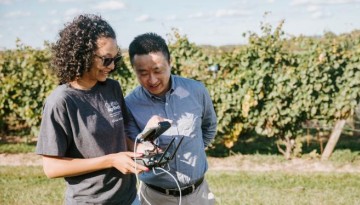
New community-driven network of plant biotechnologists will improve plant transformation capacity, addressing a major bottleneck in plant science needed to feed a booming global population during an era of climate change.
As students begin moving in on Aug. 15, Cornell will mark a milestone in residential life – the final three buildings of the North Campus Residential Expansion will open, enabling all first- and second-year students to live on campus or in Cornell-affiliated housing.
James Turner, the founding director of Cornell’s Africana Studies and Research Center and a pioneer of the multidisciplinary approach to exploring the African diaspora, died Aug. 6.
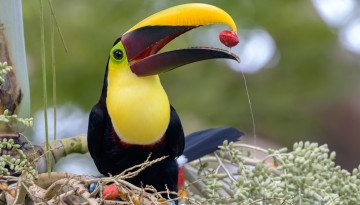
Birds living in tropical mountains have narrow ranges. Why not make use of the whole mountain? A new study finds the dominant influence for their choice has to do with the neighbors.
A portable diagnostic device designed by researchers at Cornell Engineering and Weill Cornell Medicine seeks to provide a fast and accurate diagnosis of Kaposi sarcoma, a common yet difficult-to-detect cancer that often signals the presence of HIV infection.
Nix, a miniature donkey with a potentially fatal heart condition, is on the mend after a successful pacemaker implantation by veterinarians at the Cornell University Hospital for Animals – the first surgery of its kind in a large animal species at Cornell.
Thirteen enlisted military service members and veterans completed an intensive two-week curriculum at Cornell in partnership with the nonprofit Warrior-Scholar Project, which helps veterans transition to higher education.
In a series of research projects and as a designer, Martin Hogue, associate professor of landscape architecture, has explored the history and culture of camping.