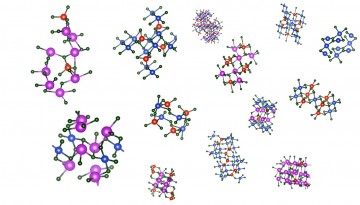
A collaboration of researchers led by Cornell has been awarded $22.5 million from the National Science Foundation to continue gaining the fundamental understanding needed to transform the brightness of electron beams available to science, medicine and industry.
New graduate teaching assistants or early-career faculty members often find teaching daunting as they prepare to step into the classroom for the first time. Knowing what to expect in the classroom and having a set of strategies for addressing situations as they arise comes from experience.
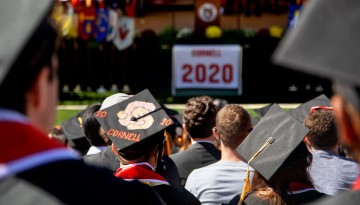
On Sept. 19, the Class of 2020 donned caps and gowns at last, gathering in person at Schoellkopf Field for a ceremony that was both jubilant and thoughtful.
A landmark gift from Peter Nolan ’80, MBA ’82, and Stephanie Nolan ’84, will establish the Cornell Peter and Stephanie Nolan School of Hotel Administration and provide scholarship funding to expand educational access for future hospitality leaders.
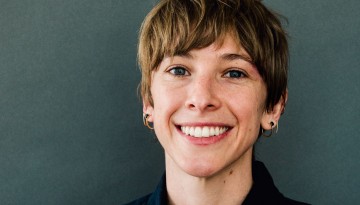
Natalie Wolchover, an award-winning science writer with Quanta Magazine, has been named the Zubrow Distinguished Visiting Journalist Fellow in the College of Arts and Sciences for spring 2022.
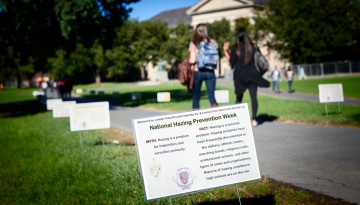
Virtual and in-person activities taking place Sept. 20-24 will empower the Cornell community to speak out against all forms of hazing in all campus activities.
An interdisciplinary research team led by Carla Gomes, professor of computing and information science, has developed Deep Reasoning Networks, which combine deep learning with an understanding of the subject’s boundaries and rules.
As the U.S. withdrawal from Afghanistan unfolded, two events kept pace brought Afghan and congressional national security experts to the campus conversation.
The newly launched Cornell Jeb E. Brooks School of Public Policy will help shape a better world, university leaders and the school’s inaugural dean said at a Sept. 15 reception in Martha Van Rensselaer Hall.