Paula Cohen, associate vice provost for life sciences, is leading an eight-year, $8 million, multi-institution grant to untangle the complex genetic rulebook for how sperm develops.
Mitigating abuses of encrypted social media communication, on outlets such as WhatsApp and Signal, while ensuring user privacy is the focus of a five-year, $3 million NSF grant to a multidisciplinary Cornell research team.
Galaxie, a 5-year-old black Lab diagnosed with B-cell lymphoma in 2018, is doing well after a rare bone marrow transplant, thanks in part to the care he’s received at the Cornell University Hospital for Animals.
A Baker Institute for Animal Health study finds the antimicrobial properties of certain stem cell proteins could help treat skin infections that are resistant to antibiotics.
From his research on environmental and resource economics to the high value he places on diversity and cross-disciplinary collaboration, learn about Jinhua Zhao in this Q&A.
Researchers developed an algorithm that shows just how much more effective Spotify would be if it incorporated both likes and dislikes, in the style of platforms like Pandora.
From fully autonomous berry harvesters to plant-based lupini bean protein bars, the startups competing for $3 million in prize money at this year’s Grow-NY Food and Agriculture Competition are bringing revolutionary innovations to market.
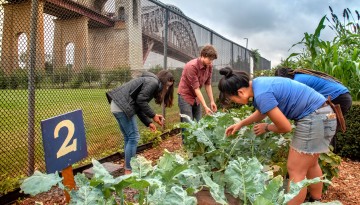
Cornell Cooperative Extension supports residents of every borough in New York City, thanks to its long-standing community relationships and faculty research and expertise.
Births declined 7.1% in the United States during the early months of the COVID-19 pandemic, according to a Cornell-led study just published in the Proceedings of the National Academy of Sciences.