Several faculty members in the Cornell SC Johnson College of Business talk about what key lessons leaders and managers can gain from the experiences of 2020 and apply to 2021 and beyond.
Poor function of the gene SMC3 can lead to improper immune cell development, and to cancer, by disrupting how DNA is structured inside the cell nucleus, according to new research from Weill Cornell Medicine.
In “Teardrops of Time: Buddhist Aesthetics in the Poetry of Angkarn Kallayanapong,” Fuhrmann places this Thai poet among the most significant of the 20th century, arguing that his poetry adapts Buddhist principles to “re-enchant,” through art, a Thailand and Southeast Asia depleted by modernization during his lifetime.
As CCSS fellows, a dozen faculty members representing seven colleges and schools will pursue ambitious research projects on issues ranging from political polarization to environmental justice.
University officials announced Feb. 5 that there is a cluster of at least 12 positive COVID-19 cases within the student body and that campus is moving to alert status Yellow: Low to Moderate Risk.
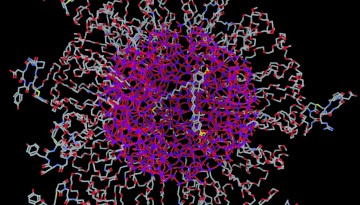
Elucida Oncology, a biotechnology company based on C Dots – ultra-small nanoparticles developed at Cornell that show promise in identifying and fighting cancer – recently secured $44 million in financing.
The seminar explores the ways in which women, people of color and others have been marginalized in science, technology, engineering and mathematics and how to address exclusion.
Researchers devised a new method of using extracts to create shelf-stable vaccines on demand, a potentially game-changing approach to fighting infection in regions that have limited access to such medicines.
Snow Angels, a web app developed in part by Cornell computer science students that allows people to volunteer their snow-shoveling services on street corners around Ithaca, launched on Jan. 28.