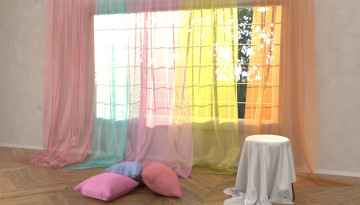
Cornell researchers, in partnership with the technology company NVIDIA, have developed a method for creating digital images of cloth that more accurately captures the texture, sheen and translucence of textiles.
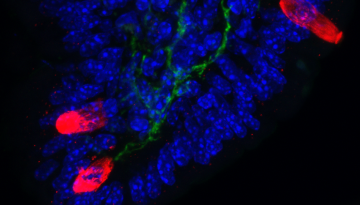
Pain sensing neurons in the gut kindle inflammatory immune responses that cause allergies and asthma, according to a new study by Weill Cornell Medicine.
Smaller grains – the microscopic crystal regions within the material – normally make metal stronger, but when deformed at extreme speeds, this rule flips and metals with very small grains actually become softer, new Cornell research reveals.
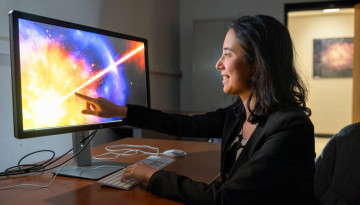
With the 2026 Newton Lacy Pierce Prize, the American Astronomical Society recognizes Anna Y. Q. Ho’s pioneering investigations of extreme explosions powered by stellar death.
The North Country Fruit and Vegetable Prescription Program helps participants with chronic disease learn to eat more healthfully – and get $150 in free vouchers for fruits and vegetables.
Women played a major role in debates surrounding the fight against apartheid in South Africa, Rachel Sandwell writes in a new book, “National Liberation and the Political Life of Exile: Sex, Gender, and Nation in the Struggle against Apartheid.”