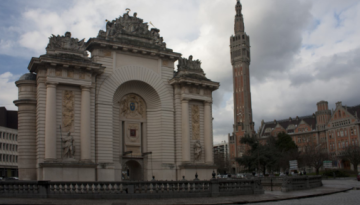
A new approach, called WildCAT3D, is making it easier to visualize lifelike 3D environments from everyday photos already shared online, opening new possibilities in industries such as gaming, virtual tourism and cultural preservation.
An international research expedition involving Cornell has uncovered new details as to why a 2011 earthquake northeast of Japan behaved so unusually as it lifted the seafloor and produced a tsunami that devastated coastal communities.
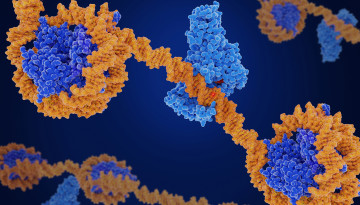
Researchers discovered that DNA packaging structures called nucleosomes, which have been traditionally seen as roadblocks for gene expression, actually help reduce torsional stress in DNA strands and facilitate genetic information decoding.
Based on poems by A&S alumna Tsitsi Ella Jaji, M.A. ’06, Ph.D. ’08, the songs by Shawn Okpebholo bring to life individual stories preserved by the Cornell-based Freedom on the Move project.
Now divided between Romania and Ukraine, the region never fit easily among its neighbors, as regimes including the Habsburg Empire and the Soviet Union tried to remake it in their image.
As soil microbes break down plant residues, they produce a diverse set of molecules, but this diversity starts to fall after the initial phase of decomposition (roughly 32 days). Understanding how soils retain or emit carbon dioxide during this process may inform climate change resilience efforts.
A new study based on mathematical modeling reveals how parasites’ choice between using resources to replicate within hosts and transmitting to new mosquito and human hosts might limit their virulence.
The new method, Semi-Local Density Fingerprints (SLDFs), can predict molecular properties with up to 100 times more accuracy than the current most popular method for modeling molecules and materials.