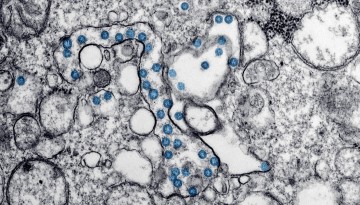
A Cornell-led COVID-19 patient registry, organized by Weill Cornell Medicine, continues to be a source of medical insight into the workings of the novel coronavirus and treatment of infected patients.
Students working with faculty and staff in the Department of Performing and Media Arts have created nine short films exploring life at Cornell in the time of COVID-19. “Off-Campus/On Screen” will be shown online Dec. 18-20.
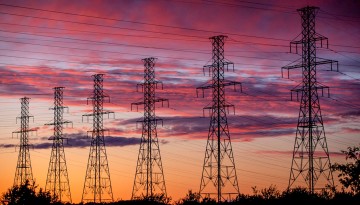
The New York Power Authority is partnering with the Cornell Climate Smart Solutions Program to deliver a comprehensive training program to its nearly 2,400 employees in New York.
Cornell Atkinson is soliciting nominations for The Earthshot Prize, a new global award supported by The Duke and Duchess of Cambridge to tackle the world’s biggest environmental challenges.
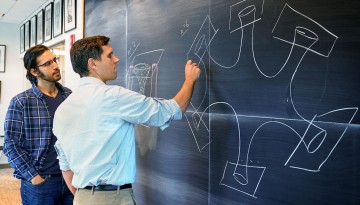
Associate professor Tom Hartman’s May 2020 paper on replica wormholes is being cited as part of a recent series of articles building toward a solution to a famous paradox in theoretical physics.
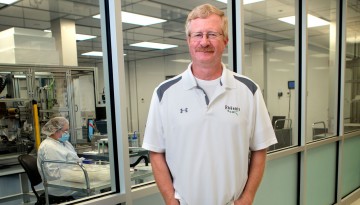
Alumnus Greg Galvin, the 2014 Cornell Entrepreneur of the Year and founder and CEO of Rheonix, is ramping up production of an automated, same-day test for the virus that causes COVID-19.
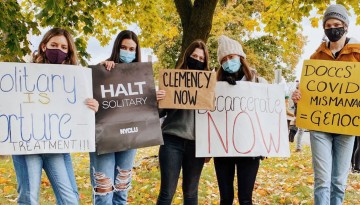
A group of Cornell undergrads, members of the new Cornell chapter of the Parole Preparation Project, celebrated earlier this month after helping an incarcerated man get released on parole after 28 years in prison.
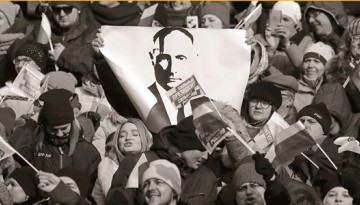
In “The Autocratic Middle Class: How State Dependency Reduces the Demand for Democracy,” author Bryn Rosenfeld connects rapidly growing middle classes in post-Soviet countries with growing authoritarianism in those countries.