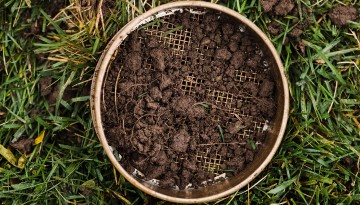
Two Cornell soil scientists have helped develop a powerful new tool that will help researchers and policymakers map the global potential for carbon sequestration.
Tao Leigh Goffe, assistant professor in the College of Arts and Sciences, is one of the co-founders of the Journal of Indentureship and its Legacies, a new peer-reviewed publication set to debut in May 2021.
Mildred Warner has received the ACSP Margarita McCoy Faculty Award for the advancement of women in planning in higher education through service, teaching and research.
After co-leading Underrepresented Minorities in Computing at Cornell, Jehron Petty '20 set out to boost representation of Blacks and Latinos in computer science and engineering nationwide.
On Dec. 4, the final installment of the Democracy 20/20 webinar series will assess the state of American democracy in the wake of the contentious 2020 presidential election.
Chloe Ahmann co-edited “Breathing Late Industrialism,” a special issue of Engaging Science, Technology, and Society, to focus not just on the wreckage of post-industrial landscape but also on the “radical potential” of how “late industrial systems might be put to life-affirming work.”
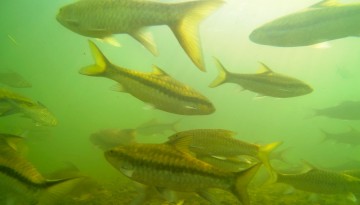
A collaboration between researchers from Cornell and the University of Wisconsin-Madison has found that small, community-based reserves in Thailand’s Salween River Basin are serving as critical refuges for fish diversity in a region whose subsistence fisheries have suffered from decades of overharvesting.
Architect Martin Miller discusses computational design techniques from artificial intelligence to robotic fabrication, and the fast pace of working on projects in China, collaboration and creativity, and his advice to students.
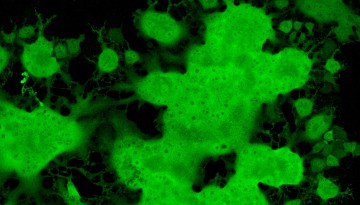
Scientists at the College of Veterinary Medicine developed a new technology for studying viruses directly in their host cells, opening the door to finding a functional cure for HIV – and a possible tool in the fight against COVID-19.