When this year’s Empire Farm Days – the largest outdoor agricultural trade show in the Northeast – was forced online July 29-31 due to COVID-19, organizers from the Soil Health Center quickly transformed events into a virtual format.
A pair of binary neutron stars in the Milky Way galaxy – discovered by a pulsar survey developed at Cornell – is giving researchers a front-row seat what may be the stars’ eventual cataclysmic merger.
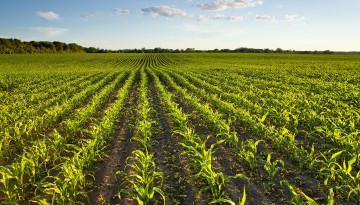
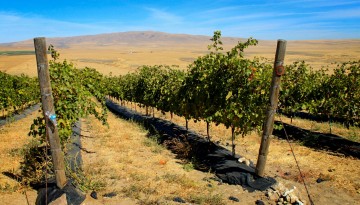
Some farmers will be facing a difficult conundrum amid climate change, according to a new study by researchers from Cornell and Washington State universities: either increasingly experience revenue volatility, or choose a more predictable decrease in crop yields.
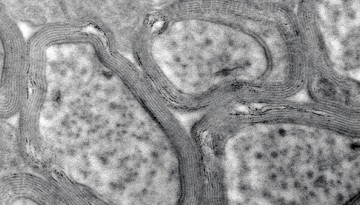
Fenghua Hu is researching factors that cause Alzheimer’s and similar diseases. Her new study shows the role that one particular gene plays in protecting the central nervous system via the formation and maintenance of the myelin sheath.
A collaboration between eCornell and the nonprofit National Education Equity Lab is giving high school students in underserved communities the opportunity to develop skills in business analytics while gaining the confidence to recognize they can excel in college.
Cornell’s Adult University continues its mission of lifelong learning by presenting free online courses, lectures and seminars for adults and youth from July 6-31.
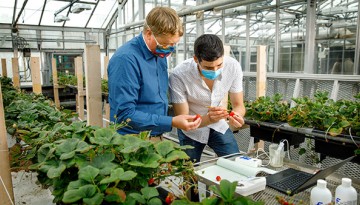
Thanks to a grant from the USDA, horticulture experts in the College of Agriculture and Life Sciences will help design new training programs for workers in controlled environment agriculture.
President Martha E. Pollack expressed “unqualified support for our international students,” following new guidelines released by ICE prohibiting international students from remaining on campus if classes are held online.
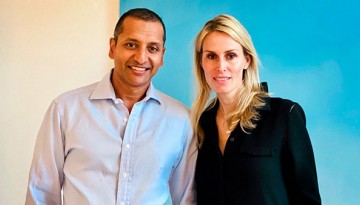
A $1 million gift from Robert ’92 and Carola Jain to the College of Arts and Sciences will support Black A&S students with demonstrated need, and others who enhance Cornell’s diversity, equity and inclusion.