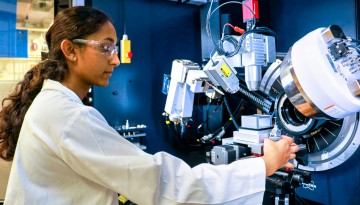
The Cornell Center for Materials Research is helping startup companies create new, innovative products by connecting them with university researchers while also boosting economic development in New York state.
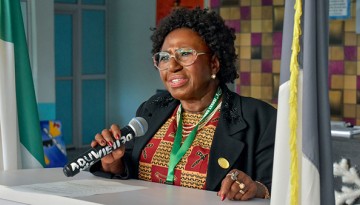
N’Dri Thérèse Assié-Lumumba began her term as director of the Einaudi Center's Institute for African Development July 1. She is leading IAD’s contributions to the center’s new thematic initiative on global racial justice.
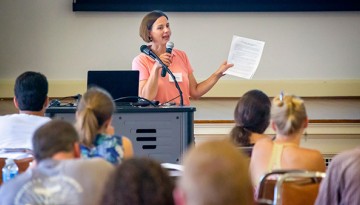
From testing programs to course rosters, eight committees of university leaders, faculty and staff are hashing out details related to the reactivation of Cornell's Ithaca campus for residential instruction this fall.
The Cornell Law School First Amendment Clinic, working on behalf of its client, The New York Times, helped secure the release by the Center for Disease Control of previously unseen data that provides the most detailed look yet at nearly 1.5 million American coronavirus patients.
A new Cornell study finds that when small-scale farmers are trained in food safety protocols and develop a farm food safety plan, new markets open up to them, leading to an overall gain in revenue.
The Jansky Lectureship recognizes outstanding contributions to the advancement of radio astronomy and is being awarded to Haynes “for her influential impact to our understanding of galaxies.”
Cornell researchers developed a new form of electron microscopy that uses complex algorithms to achieve faster, more efficient imaging – and they obtained the best results by defocusing their detector and blurring the beam.
The vast majority of Uber and Lyft drivers in Seattle earn more than the average taxi driver, and their hourly earnings are on par with the general workforce of that city, according to an Institute for Workplace Studies report commissioned by the two major ride-share platforms.
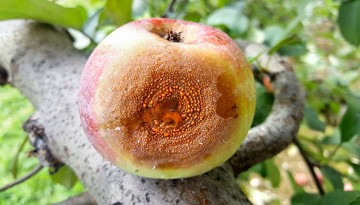
In a study of New York state apple orchards, Cornell plant pathologists have identified a new fungal pathogen that causes bitter rot disease in apples.