Alan G. Merten, who served as the Anne and Elmer Lindseth Dean of the Samuel Curtis Johnson Graduate School of Management from 1989 to 1996, died May 21 in Naples, Florida, of complications from Parkinson’s disease. He was 78.
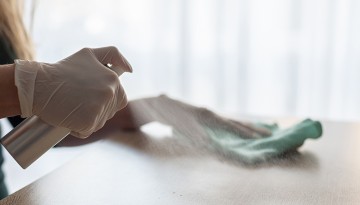
The commercialization of a Cornell-created antimicrobial coating technology that keeps surfaces clean by extending the life of chlorine-based disinfectants – by days and even weeks – is being fast-tracked to determine how well it can combat COVID-19.
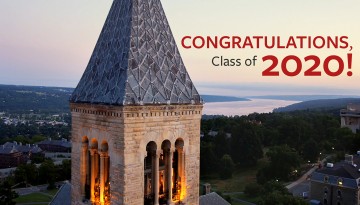
The Class of 2020 overcame unforeseen obstacles to complete their final semester, President Martha E. Pollack said in a video message to Cornell’s newest alumni May 23. “I am so very proud of each and every one of you.”
With support from the Cornell Board of Trustees, the university has instituted a moratorium on new private investments focused on fossil fuels and plans to grow the endowment's investments in alternative energy technologies.
Tom Ruttledge, retired senior lecturer in the Department of Chemistry and Chemical Biology, in the College of Arts and Sciences, died May 19 in Ithaca. He was 55.
G. Peter Lepage, the Goldwin Smith Professor of Physics, and Thomas Pepinsky, professor of government, have received two of Cornell’s highest honors for faculty members.
Career services offices are helping students find alternate jobs or experiences, as many internships and summer positions have fallen through due to the COVID-19 pandemic.
The prospect of residency typically brings jitters to newly minted doctors, but the transition has become far more complex with numerous unknowns surrounding the ongoing COVID-19 pandemic.