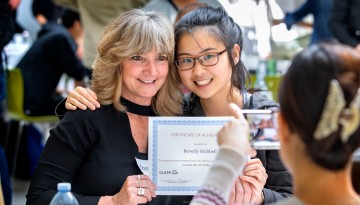
Another successful semester of Cornell staff members pairing with student mentors to learn new skills was showcased and celebrated May 10 at a luncheon for participants in the Community Learning and Service Partnership program.
Jennie Sims, the recipient of the Mann Outstanding Graduate Student Award, is probing why, how and when a cell chooses to repair itself, which has implications in cancer research.
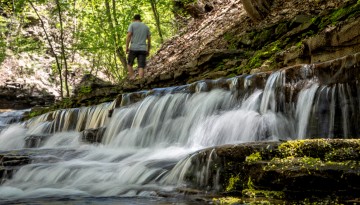
Resources abound – on Cornell’s Gorge Safety website, on signs along the Botanic Gardens’ trails and through the work of the gorge stewards – to help visitors safely explore and enjoy Cornell Botanic Gardens’ Natural Areas.
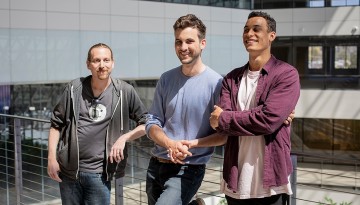
Andrés Gutiérrez ’15, M.S. ’19 and Adler Faulkner ’18 started their company Comake, a smart workstation that consolidates accounts and cloud services, while students in eLab.
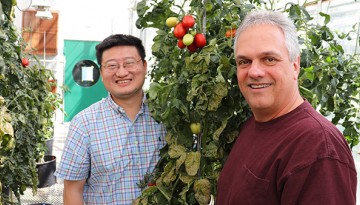
Researchers from Boyce Thompson Institute have collected the genome sequences of 725 different wild tomato types to create a pangenome, which will help breeders develop better strains.
In 1828, when American expatriate Nancy Kingsbury Wollstonecraft died at 46 in Matanzas, Cuba, her dream of publishing her life’s work of botanical illustrations went unfulfilled. And yet, almost two centuries later, her reputation as a pioneer is just beginning.
As Cornell recognizes the 50th anniversary of the occupation, dialogue around these important issues continues. Ezra offers two essays written by Cornellians who are among the many looking back on the occupation to explore its lessons, both broad and personal.
On their way home from playing the Yankees in New York, the Cleveland Indians made a slight detour and stopped by Cornell’s Hoy Field on May 16, 1934, to play against the Big Red baseball team in front of 4,000 fans.