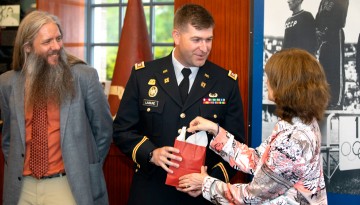
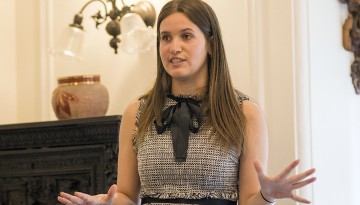
Thirty-three university staff members were recognized for earning academic degrees at the 23rd annual Staff Graduate Reception, May 20 in the Hall of Fame Room in Friends Hall.
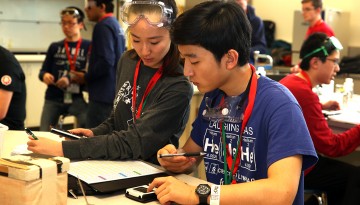
About 2,000 middle and high school students will show their science and engineering acumen at the 35th annual Science Olympiad National Tournament, May 31-June 1 at Cornell.
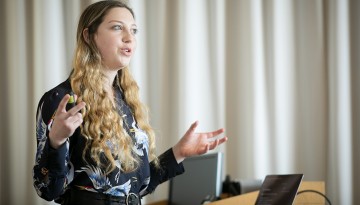
Seniors in the College Scholar program in the College of Arts and Sciences presented their senior projects May 4; they ranged from studying juror decision-making to people’s reactions to AI.
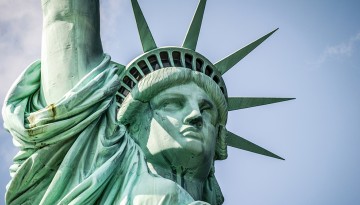
American studies professor Maria Cristina Garcia, who came to the U.S. from Cuba as a child, joined in the May 16 celebration of the opening of the new Statue of Liberty Museum, which she helped create.
The Humanities Scholars Conference, May 10 at the A.D. White House, featured 28 undergraduate research and thesis presentations and laid groundwork for an interdisciplinary humanities scholars program.
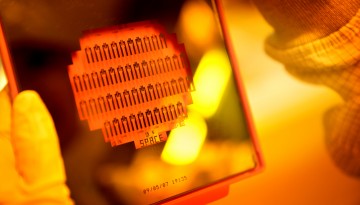
Since last August, graduate student Nicole Chu has been fabricating the foundation of a wearable air quality monitoring device, by using tools at the Cornell NanoScale Science and Technology Facility.
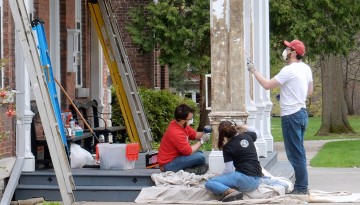
Historic Preservation Planning students spent their annual Work Weekend doing restoration work on the historic Oneida Community Mansion House in Oneida, New York.
The new history course, Statues and Public Life, is part of the classics department’s participation in Cornell’s Active Learning Initiative, administered through the Office of the Provost.