A Cornell-led team has discovered that at the onset of a rare liver disease, a small non-coding RNA molecule becomes silenced, a finding that may hold the key to treatment.
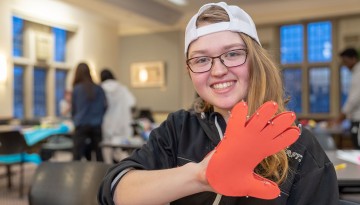
Using the five steps of design thinking, Diane Levitt from Cornell Tech gave a workshop Feb. 20 on how to work as a team to create rapid prototypes in an attempt to solve real-world problems.
A new study suggests companies that disclose their wages can shrink the gap between what men and women earn by 7 percent. And it makes the workplace more equitable in other ways as well.
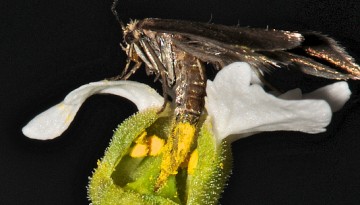
Research co-led by Robert Raguso, professor of neurobiology and behavior, explains why plants of the same variety in different locations can have dramatically different scents.
The Smithers Institute at the ILR School has been awarded a Defense Department research grant for a four-year study examining the transition from military to civilian employment.
After years of advocating for funding to improve the infrastructure for grape research, U.S. Sen. Charles E. Schumer announced Feb. 26 $68.9 million to build a new federal grape genetics research lab at Cornell AgriTech in Geneva, New York.
As climate change threatens coastal areas, experts from the New York Sea Grant program are involved in a project to protect the state’s shorelines and the people who live near them.
Graduate student Michał Matejczuk has been named a Luce Scholar by the Henry Luce Foundation and will spend a year working in Asia starting this summer.