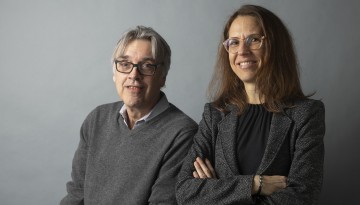
Richard Cerione, the Goldwin Smith Professor of pharmacology and chemical biology, and Claudia Fischbach, professor of biomedical engineering, discuss their collaborative research on cancer biology – the metabolic changes required for cancer development and cancer cells' interactions with other cells.
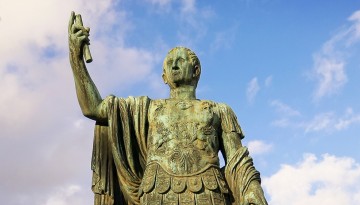
Professor Barry Strauss details the intense ambition and human failings of 10 of history’s most famous men in his latest book, “Ten Caesars: Roman Emperors from Augustus to Constantine.”
Two Weill Cornell Medicine trauma surgeons held a pair of training sessions at Cornell Health for “Stop the Bleed,” a national effort to teach basic bleeding control.
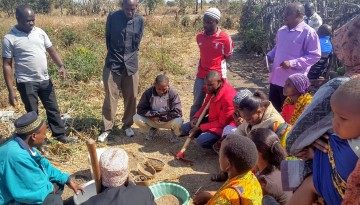
Smallholder farmers in sub-Saharan Africa are engaging in sustainable and equitable agricultural development through an innovative curriculum that puts them front and center.
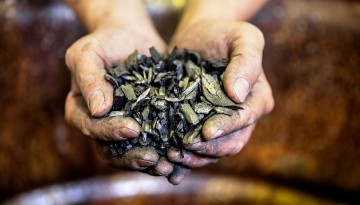
A Cornell-led study supported by the Atkinson Center for a Sustainable Future shows that biochar has great potential as a fertilizer because of its ability to soak up nitrogen, and its method for doing so.
In a groundbreaking study illuminating the extensive scope of mass incarceration in the U.S., nearly 1 in 2 Americans have had a member of their immediate family spend time in jail or prison – a far higher figure than previously estimated.
Vice President Ryan Lombardi and Father Daniel McMullin issued a statement March 3 following notification by the Roman Catholic Diocese of Rochester about an allegation of sexual abuse against Rev. Carsten Martensen, S.J., from the 1970s.
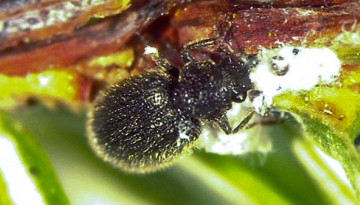
Mark Whitmore, extension associate in the College of Agriculture and Life Sciences, briefed congressional staffers on an invasive species threatening hemlock trees and ways to combat it.
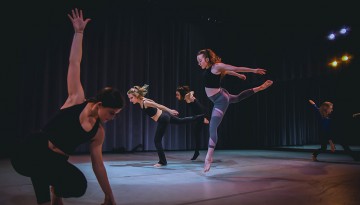
Events this week include Locally Grown Dance at the Schwartz Center; a book talk with Rachel E. Dunifon on grandparents raising grandchildren; and guest filmmaker Lawrence Loewinger with “Bogdan's Journey.”