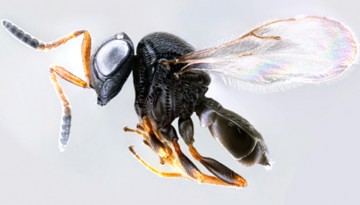
Cornell researchers have released samurai wasps on 24 farms throughout New York to test how well they control brown marmorated stink bugs, an agricultural and household pest.
In a new Cornell study, psychologists found that participants were more likely to call male professionals – even fictional ones – by their last name only, compared to female professionals, an example of gender bias that may be contributing to inequality.
Summer events at Cornell include a party at the Johnson Museum, free concerts and lectures, Cinema Under the Stars, a college fair for high school students and Staff Development Day.
Christopher Wildeman, a leading scholar on mass incarceration and child maltreatment, will become director of the Bronfenbrenner Center for Translational Research as of July 1.
Erie County officials shared initiatives focused on sustainability and economic growth, quality of life and building strong communities with faculty at a recent roundtable.
Cornell Law School’s Makwanyane Institute welcomed 14 African lawyers to campus, where they’ll get intensive training to represent those facing the death penalty in Africa.
The Healthy Living Program is offering free group fitness classes the week of July 23-27 to anyone in the Cornell community with a Cornell ID card. New participants will be eligible to win prizes for attending.