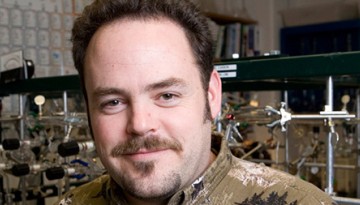
NutriPhone dials in fast, affordable health care

NutriPhone, a new smartphone apps to monitor users' nutrition, blood and stress, was developed at Cornell's Atkinson Center for a Sustainable Future.

Physical sciences at Cornell ranked No. 9 in world

The physical sciences at Cornell University jumped to No. 9 among institutions worldwide, up from No. 15 last year, according to the Times Higher Education 2015-16 World University Rankings.

William Dilger, ornithologist, died in September

William C. Dilger ‘46, M.S. ’51, Ph.D. ’55, former Cornell professor of neurobiology and behavior, died at his home in Freeville, New York, on Sept. 17 at the age of 92.

Life science center awarded $9.2M by New York state

New York state has awarded Cornell's Center for Advanced Technology a $9.2 million grant and given approval to continue its program for up to 10 more years.

Soil scientist Nyle Brady dies at 95

Nyle Brady, a professor and leader in soil science, died Nov. 24 in Colorado at age 95. He joined Cornell in 1947 and held leadership roles in the College of Agriculture and Life Sciences.

New tech promises fast, accurate stroke diagnosis

Scientists at Cornell’s Baker Institute for Animal Health have developed a device that helps diagnose stroke in less than 10 minutes using a drop of blood barely big enough to moisten your fingertip.

Dog owners urged to vaccinate pets against new flu

A virologist at the College of Veterinary Medicine urges dog owners to take advantage of a new vaccine to protect against H3N2.

Protein networks help identify new chemo drug candidates

An experimental chemotherapy kills leukemia cells that are abundant in proteins critical to cancer growth, according to new research from Weill Cornell Medicine.

Osteoarthritis finding sheds light on HA injection controversy

Cornell researchers investigating why HA treatments have produced mixed results discovered that a molecule, lubricin, helps anchor HA at the tissue surface, which helps to move cartilage into a low-friction regime.