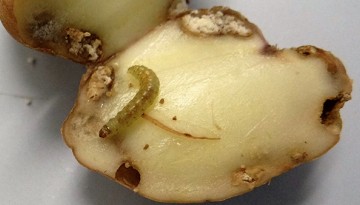
Potato plants boost the chemical defenses in their leaves when Guatemalan tuber moth larvae feed on their tubers, report researchers at the Cornell-affiliated Boyce Thompson Institute.
The Cornell equestrian team is holding a 20th birthday bash for Clifford, one of the team's favorite warmblood horses, May 14. The event is open to the public.
Dr. Lorin D. Warnick, Ph.D. ’94, interim dean of the Cornell University College of Veterinary Medicine, has been named the Austin O. Hooey Dean of Veterinary Medicine, effective May 6.
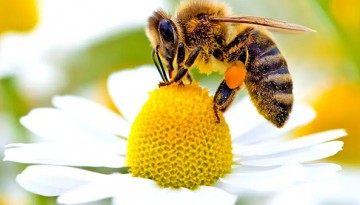
Biology professor and bee expert Thomas Seeley's new book, "Following the Wild Bees," is a celebration of the outdoors and a practical guide to the methods and craft of hunting wild honeybees.
Richard "Rick" Harrison, Ph.D. ’77, professor of ecology and evolutionary biology and a pioneer in his field, died unexpectedly April 12 while visiting Lizard Island, Australia.
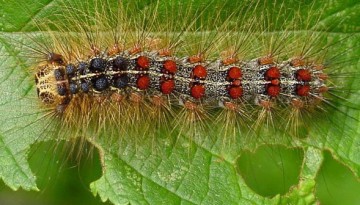
A new fungal pathogen is killing gypsy moth caterpillars and crowding out communities of pathogens and parasites that previously destroyed these moth pests.
Four Cornell faculty members are among 213 national and international scholars, artists, philanthropists and business leaders elected new fellows of the American Academy of Arts and Sciences.