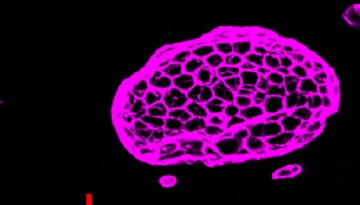
A three-year, $4.5 million grant will support a three-pronged research project to map the brain circuits that contribute to mood shifts in bipolar disorder and help develop personalized therapies for the condition.
At 15, Tobias Weinberg lost the ability to speak - now as a Ph.D. student at Cornell Tech, he's using AI to improve the technologies he and others with speech disabilities rely on to communicate.
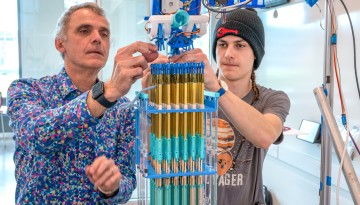
A multicollege team has developed a prototype of a knitting machine that creates solid, knitted shapes, adding stitches in any direction so users can construct a wide variety of shapes and add stiffness to different parts of the object.
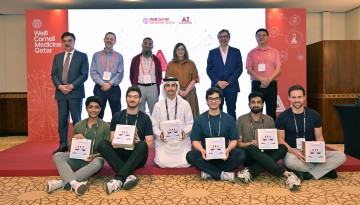
Weill Cornell Medicine-Qatar hosted its first AI Hackathon – a collaborative, interdisciplinary event that brought together medical and computer science students to develop AI-driven solutions for pressing clinical challenges.
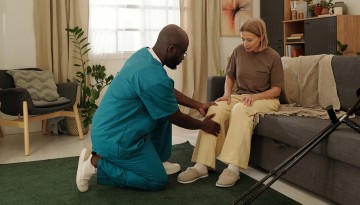
A doctoral student has developed a text message-based system that regularly updates both long-term hospital patients’ and care facilities’ availability statuses, smoothing a normally time-consuming placement process.
Researchers at Cornell Tech and Cornell Bowers engaged directly with 15 content moderators on Reddit to see exactly how they try to preserve the news sharing site's humanity in an increasingly AI-infused world.
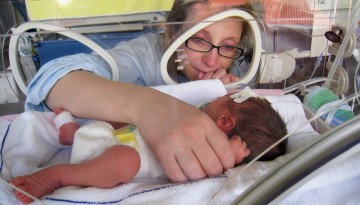
Among preterm newborns, greater exposure to the mother’s voice after birth appeared to speed up the maturation of a key language-related brain circuit.