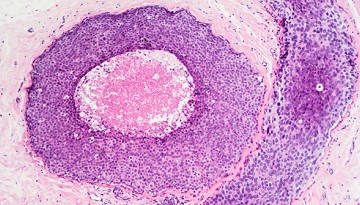
Weill Cornell Medicine investigators have found that an immune “tolerance” to gut microbes depends on an ancient bacterial-sensing protein that is normally considered a trigger for inflammation.
Weill Cornell Medicine researcher Nancy Du received a $500,000 grant from the Congressionally Directed Medical Research Programs at the U.S. Department of Defense, but a stop-work order brought her research to a halt in April.
Cornell Tech Assistant Professor Raaz Dwivedi has co-founded Traversal, a startup emerging from stealth this week with a mission: to transform how modern software systems detect and resolve outages using artificial intelligence.
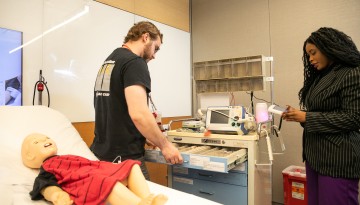
Cornell Tech researchers unveiled a robot that helps emergency room teams locate life-saving supplies faster, revealing how design can shape collaboration under pressure.
Researchers at Weill Cornell Medicine and Memorial Sloan Kettering Cancer Center provide fresh insights about how cancers evolve when they metastasize – insights that could aid in developing strategies to improve the effectiveness of treatment.
A clinical trial in patients with advanced breast cancer has found the use of liquid biopsy blood tests for early detection of a treatment-resistant mutation, followed by a new type of treatment, substantially extends the period of tumor control.
Using an algorithm they call the Krakencoder, researchers at Weill Cornell Medicine are a step closer to unraveling how the brain’s wiring supports the way we think and act.
The honor is presented annually, recognizing awardees on campuses across the SUNY system for their commitment to sustaining intellectual vibrancy, advancing the boundaries of knowledge, providing the highest quality of instruction and serving the public good.